


Abu Dhabi brands entering 2026 are preparing for a larger operational reset, because the UAE is expanding restrictions on disposable consumer items used every day in packaging, retail, and FMCG distribution. From 1 January 2026, new rules take effect under Cabinet Decision No. 23 of 2024, prohibiting the import, manufacture, distribution, and sale of several additional plastic items such as beverage cups, lids, cutlery, plates, straws, stirrers, and expanded polystyrene (EPS or Styrofoam) food containers. Gulf News also reports that from January 2026, the import, manufacture, and trade of a wider range of single-use consumer plastic products will be prohibited. For compliance planning, this means brands must align packaging specs, procurement contracts, and SKU-level components well before the effective date.
The compliance cost exposure is not only about swapping a cup or a lid. It spreads across inventory, purchasing, and penalties. Businesses cannot continue using existing stock after the effective date, which turns leftover disposables into a write-off risk and forces earlier ordering of compliant alternatives. Non-compliance also carries direct financial penalties. Fines start from AED 2,000 for a first violation and can increase to AED 10,000 for repeated offences, alongside possible inventory seizure and regulatory action. For Abu Dhabi retailers, restaurants, and delivery-led FMCG brands, that changes the cost equation: packaging becomes a governance issue, not just a sourcing decision, because enforcement can disrupt store operations and fulfillment continuity.
Packaging Materials in 2026: Where Cost Pressure Builds
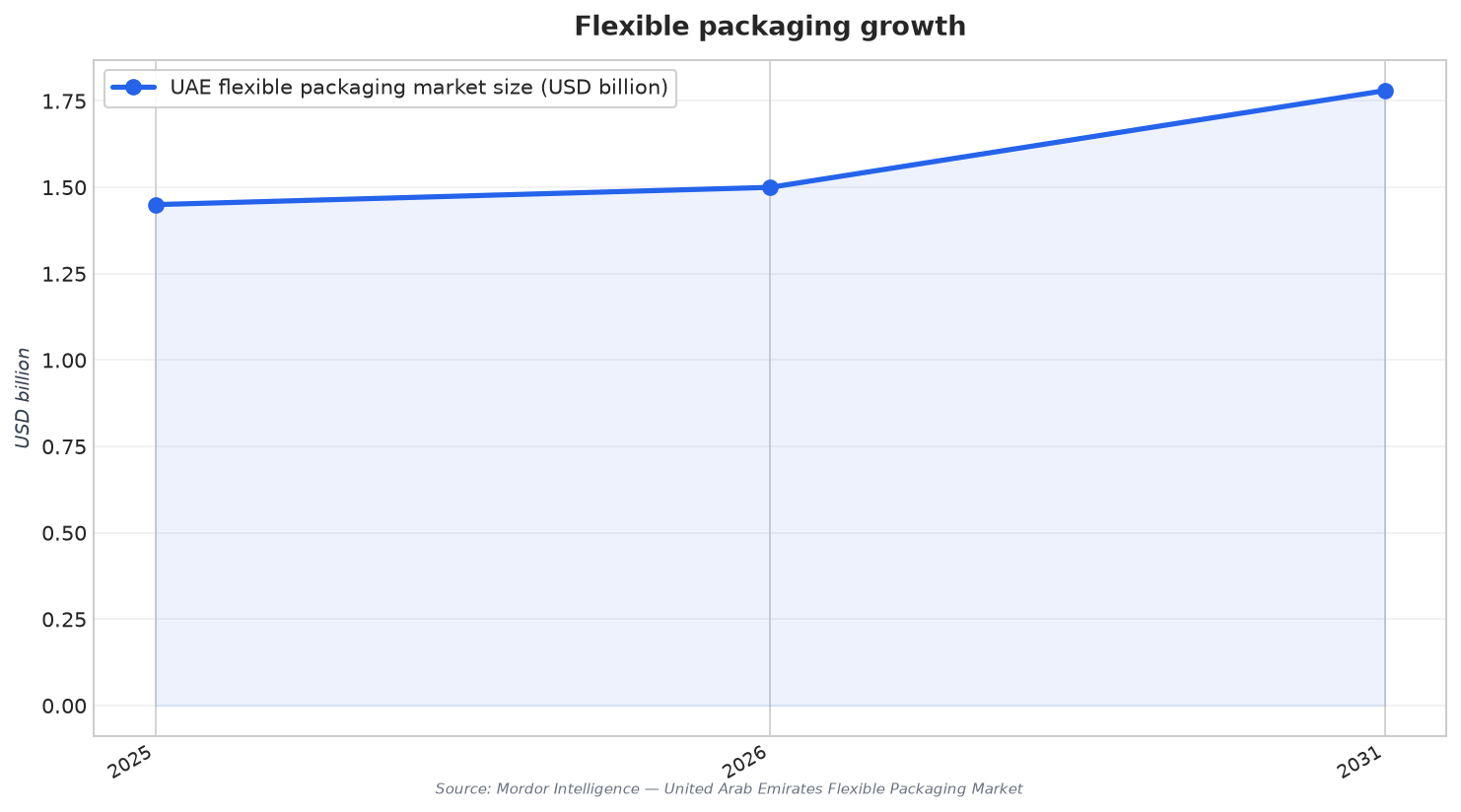
Packaging costs in the Emirates are also shifting because converters are adapting to stricter recyclability expectations and circular-economy alignment. Mordor Intelligence values the United Arab Emirates flexible packaging market at USD 1.45 billion in 2025, estimating growth from USD 1.5 billion in 2026 to USD 1.78 billion by 2031, at a CAGR of 3.49% (2026–2031). In 2025, plastic formats led with 64.58% market share, while bioplastics and compostable materials are projected to grow at a 5.02% CAGR through 2031. These figures are market context, but they matter for Abu Dhabi brands because scale shifts can affect lead times, minimum order quantities, and price negotiation power when many buyers pivot at once.
For brands that move toward biodegradable or bio-based substitution, resin economics can be a visible compliance cost driver. In the Middle East biodegradable plastics market, biodegradable polyesters still command a 20–50% premium to commodity polyethylene, according to Mordor Intelligence. Packaging already accounts for 71.62% of that regional biodegradable plastics market size in 2025, signaling where demand concentrates when bans tighten. The same report notes that infrastructure readiness remains uncertain, with only a handful of industrial composting projects in Dubai and Riyadh operating at pilot scale, so end-of-life certainty varies by city and by polymer grade. Separately, PolyesterTime reports that PLA is officially exempted from the ban, positioning it as a leading solution for food service and packaging applications, which may influence substitution decisions when brands need a clear regulatory path.
Retail and FMCG compliance costs in Abu Dhabi will also be shaped by bag rules and by retailer reporting expectations that flow back through supply chains. Gulf News notes the decision introduces a comprehensive ban on single-use bags, regardless of the material used, including paper bags if their thickness is less than 50 microns, effective 1 January 2026. In parallel, Mordor Intelligence’s UAE plastic packaging analysis states that converters offering traceable 30% rPET content obtain preferred-supplier status with retailers that publicly report packaging footprints. For brands, these dynamics create a practical checklist: validate bag thickness and material rules, replace banned food-service components, update packaging specifications, and qualify suppliers that can provide traceability documentation. Used once as a north-star phrase, the UAE single-use plastics ban becomes, in execution, a series of SKU-level packaging decisions that determine both cost and continuity.
When do the new UAE restrictions on single-use plastics take effect?
Which items are covered by the 2026 expansion?
What fines can businesses face for non-compliance?
How do the 2026 rules treat single-use bags?
What does the UAE single-use plastics ban mean for packaging material costs?