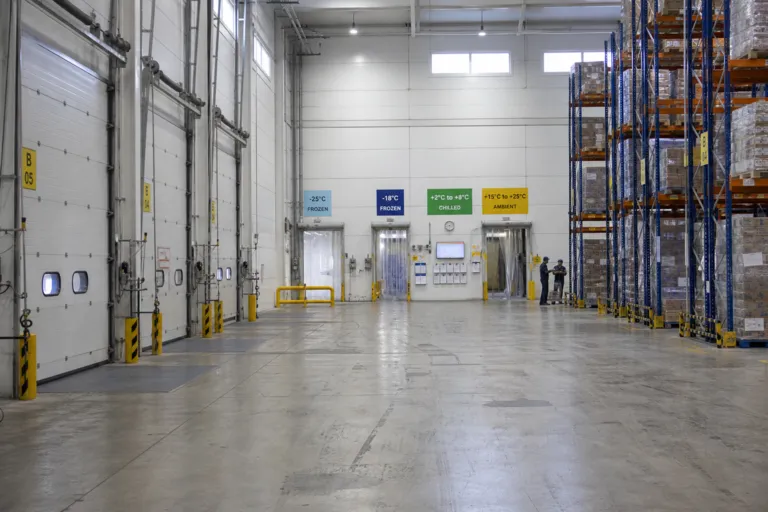
Cold chain logistics in Abu Dhabi is increasingly framed around two priorities that reshape network design: food security and pharmaceutical resilience. Mordor Intelligence describes this as a UAE pivot that turns the logistics base into a regional platform, with operators shifting from commodity warehousing toward value-added handling and multi-temperature urban nodes that support faster cycle times. In UAE-wide market structure, refrigerated storage led with 50.34% share in 2025, showing how storage remains the anchor even as value-added services are projected to expand at a 4.76% CAGR through 2026–2031. For temperature profiles, chilled cargo held a 39.54% share of UAE market size in 2025, while frozen is advancing at a 5.43% CAGR through 2026–2031. These splits matter for Abu Dhabi because they mirror the city’s practical balancing act: import-heavy food flows that need chilled and frozen capacity, and healthcare distribution that needs documented, time-definite performance.
At the emirate level, Abu Dhabi is frequently positioned as a core pillar of national throughput rather than a peripheral market. Nexdigm states that Dubai and Abu Dhabi dominate the UAE cold chain logistics market because they serve as major international trade gateways and host advanced logistics infrastructure, including specialized pharmaceutical distribution hubs and large-scale food import terminals. In Abu Dhabi specifically, Nexdigm points to the Khalifa Industrial Zone as supporting pharmaceutical and food logistics infrastructure. MarkWide Research also highlights the Abu Dhabi side of the equation by recommending expansion of redundant cooling capacity in the Khalifa Port zone before land scarcity intensifies, reinforcing that location decisions and industrial zoning constraints influence how quickly capacity can scale. In short, Abu Dhabi’s cold chain performance is tied to how well ports, industrial zones, and urban delivery loops connect under strict temperature-control expectations.
Food Security Storage and the Summer Capacity Squeeze
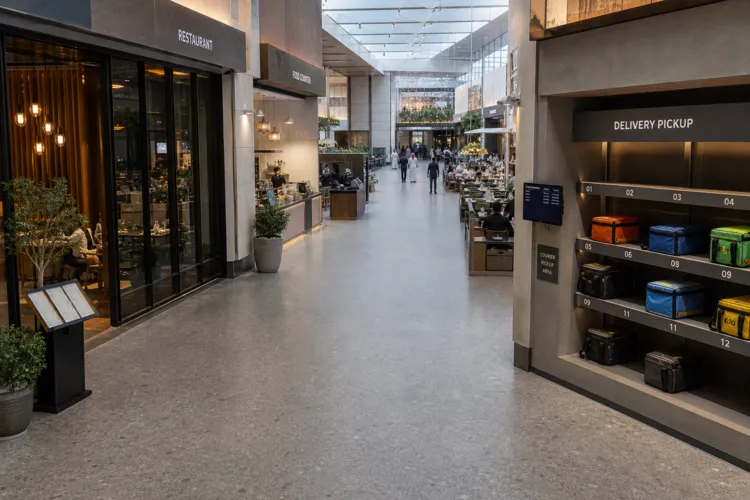
Food security storage needs are not just about holding inventory; they also reflect how quickly the market is shifting toward faster replenishment and closer-to-consumer placement. Mordor Intelligence notes that rapid growth in e-commerce grocery and frozen food delivery compresses delivery windows and moves inventory away from large single-site warehouses toward micro-fulfillment hubs that combine chilled, frozen, and ambient zones. This shift can create localized pressure on cold rooms and cross-docks near dense residential clusters, especially when operators must protect temperature integrity end to end. AGS Logistics adds an operational lens: in the UAE, summer temperatures regularly exceed 45°C, and peak months from June to September create increased demand for cold storage space, meaning capacity can tighten quickly. That tightening risk becomes more acute when communication gaps appear between the shipping agent, the cold store operator, and the last-mile driver, which AGS identifies as a common point where temperature excursions happen.
Pharma distribution adds another layer of compliance and documentation, and it is a major growth driver across the UAE logistics system that Abu Dhabi depends on. Mordor Intelligence reports that, by application, meat and poultry held a 24.41% share of UAE cold chain market size in 2025, while vaccines and clinical-trial materials are set to grow at a 6.21% CAGR through 2026–2031. Nexdigm also describes strict compliance with pharmaceutical storage standards defined by regulatory authorities including the UAE Ministry of Health and the Emirates Authority for Standardization and Metrology, and it lists pharmaceuticals and biotechnology companies as a dominant end-user segment due to strict temperature-control needs for products such as vaccines, biologics, and insulin. Operationally, AGS describes managing GDP documentation, coordinating pre-booking of temperature-controlled warehouse space before shipments arrive, and running last-mile vehicles equipped with continuous temperature monitoring, illustrating how the most sensitive lanes require planning across air, sea, and road interfaces.
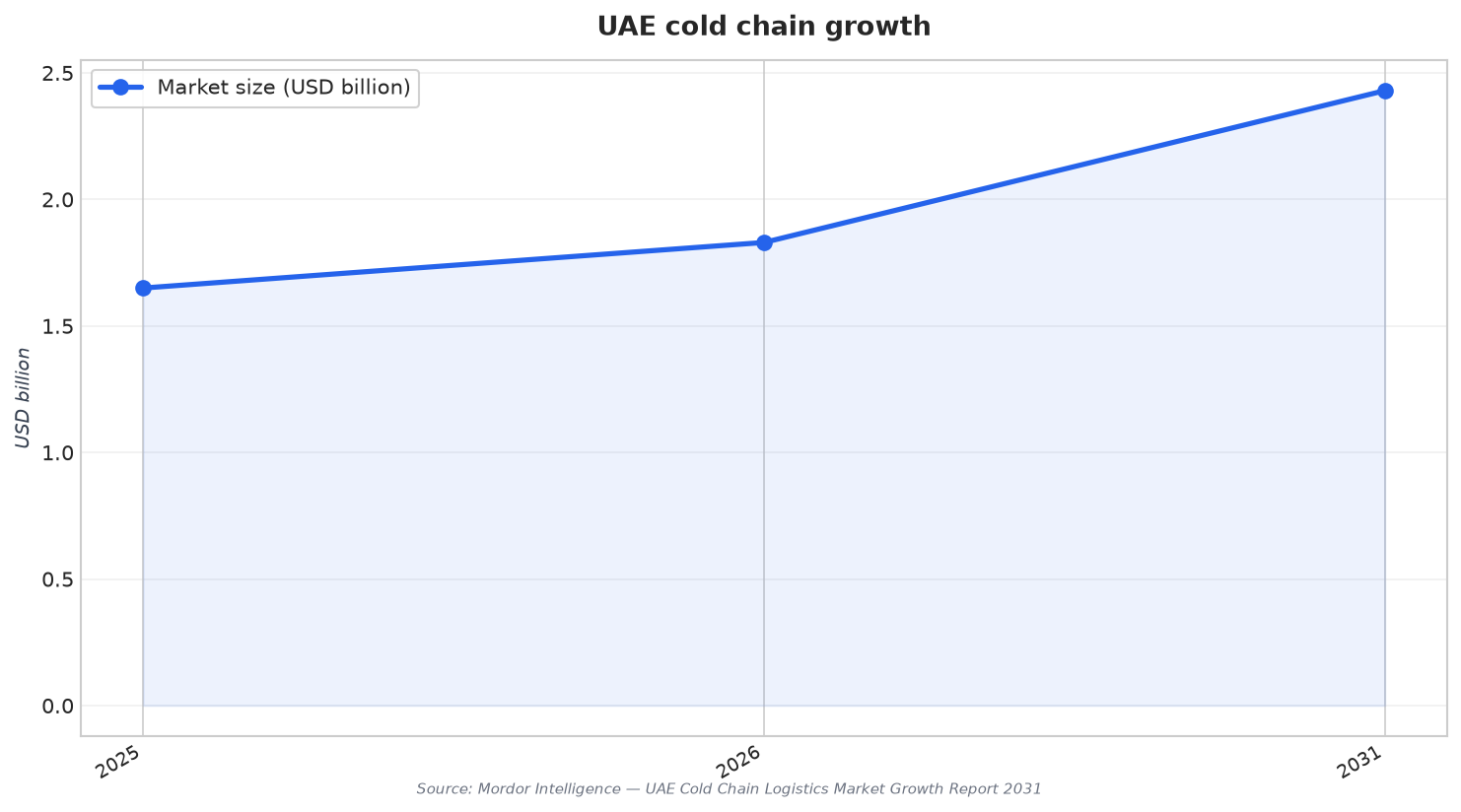
These operational realities sit inside a market that multiple sources describe as growing, but estimates vary by publisher and methodology. Mordor Intelligence values the UAE cold chain logistics market at USD 1.65 billion in 2025, with growth estimated from USD 1.83 billion in 2026 to USD 2.43 billion by 2031 at a 5.84% CAGR (2026–2031). MarkWide Research provides a different UAE-wide estimate, stating a value of $6.8 billion in 2026 projected to expand to $15.26 billion by 2035 at a 9.40% CAGR. For Abu Dhabi decision-makers, the precise headline number matters less than the consistent direction: more multi-temperature nodes, more monitoring, and more compliant handoffs. MarketsandMarkets reinforces this emphasis by describing rising adoption of IoT-enabled monitoring solutions and real-time tracking technologies across healthcare and food distribution in the UAE. The remaining gap is execution capacity: scaling refrigerated space and redundancy fast enough to keep pace with summer peaks, e-grocery velocity, and GDP-grade pharma flows.
How is the Abu Dhabi cold chain logistics market connected to the wider UAE market structure?
Which services and temperature bands shape demand in UAE cold chain logistics?
Why can cold storage capacity tighten during UAE summers?
What parts of the cold chain are growing fastest in pharma-related applications?
What do UAE market forecasts say about overall growth direction?