
Abu Dhabi’s online opportunity is best read in the context of the wider UAE. Mordor Intelligence estimates the UAE e-commerce market reached USD 12.30 billion in 2026 and forecasts USD 21.01 billion by 2031, implying an 11.29% CAGR from 2026 to 2031. In the UAE retail channel view, Mordor also reports e-commerce reached AED 42.2 billion (USD 11.49 billion) in 2025 and represented 15.7% of total retail sales. The market is already mobile-led, with smartphones at 78.67% share in 2025, and payments are shifting as digital wallets held 43.92% share in 2025 while buy-now-pay-later is forecast as the fastest-growing payment method at a 13.27% CAGR through 2031.
Category growth signals where sellers can win in Abu Dhabi’s online channel strategy, even when some headline splits are UAE-wide rather than emirate-specific. Mordor reports fashion and apparel held a 21.59% share of UAE e-commerce in 2025, while food and beverages are forecast to grow fastest at a 13.16% CAGR through 2031. A separate UAE-focused ecommerce statistics compilation, citing ECDB, puts electronics at 34% of total e-commerce revenue in 2025, showing how high-ticket items still anchor online baskets. In the broader UAE retail market, food and beverages lead overall retail sales with a 41.62% share in 2026, reinforcing why repeatable essentials matter as online adoption deepens.
Last-Mile Delivery in a Speed Era: Costs, Nodes, and Q-Commerce Reality
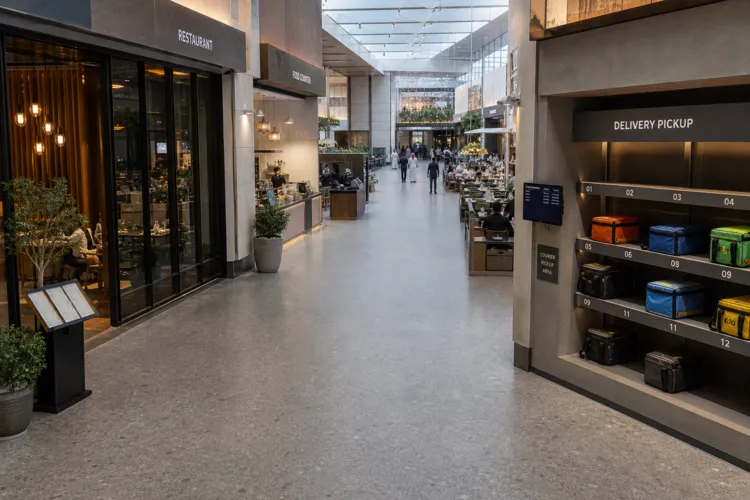
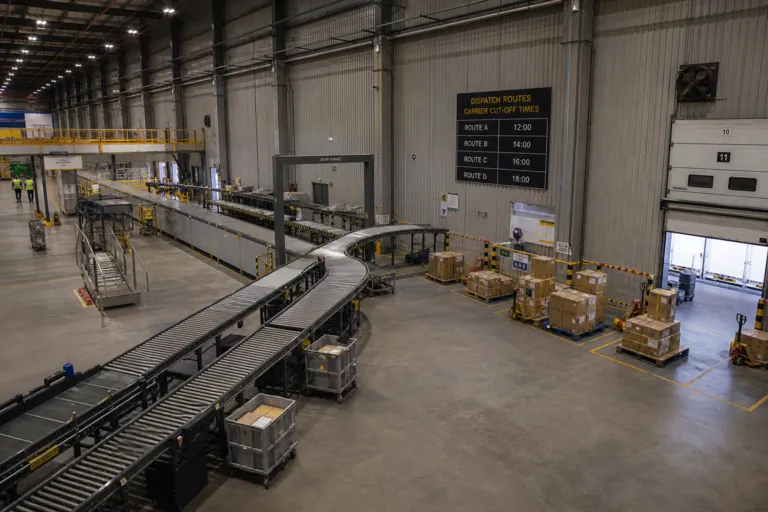
Delivery promises are tightening, but unit economics can fight back, especially outside dense cores. Mordor’s UAE e-commerce analysis points to investment in micro-fulfillment, 5G connectivity, and cloud infrastructure to compress lead times, alongside competitive “same-day” and “15-minute” propositions. Yet it also flags last-mile costs in sparsely populated emirates as a margin risk. In q-commerce logistics specifically, Mordor values the UAE market at USD 262.23 million in 2025 and projects growth to USD 571.82 million by 2031 at a 13.76% CAGR. Last-mile delivery services held 45.08% share in 2025, dark-store fulfillment was 36.09%, and Tier I cities took 61.92% share, highlighting how network density and node strategy shape speed and cost.
Cross-border and foreign-platform dynamics add another layer for Abu Dhabi sellers deciding how to position assortments and delivery standards. A UAE ecommerce trends summary interpreting a Statista cross-border share chart estimates cross-border e-commerce at approximately 12–15% of total UAE e-commerce revenue, framing the competitive presence of overseas sellers. Innovatrix Infotech states foreign e-commerce platforms are projected to grow by 19.2% between 2022 and 2026, reaching 34% market share, and notes Shein and AliExpress expanding aggressively while Amazon.ae leads in net sales among online retailers. For merchants targeting Abu Dhabi shoppers, the implication is to compete on trust, faster fulfillment, and localized category fit while using cross-border reach to expand catalog breadth when economics allow.
Operationally, onboarding and checkout friction are being engineered down across the UAE, shaping expectations in Abu Dhabi as well. Mordor reports UAE Pass surpassed 11 million users by early 2025 and processed 2.6 billion transactions across 322 services, supporting single sign-on at checkout and citing first-time conversion uplift “as much as 40%.” That matters because mobile is the dominant transaction origin in the UAE, and verified identity can also reduce fraud and chargebacks, which Mordor places historically at 1.2–1.8% of GMV. For sellers building for Abu Dhabi’s online channel, the playbook becomes clearer: prioritize mobile UX, align payment options with wallet adoption and BNPL growth, and design fulfillment choices that balance fast delivery with last-mile cost discipline.
What is the latest UAE-level benchmark that frames Abu Dhabi’s e-commerce opportunity?
Which categories show the clearest online growth signals for sellers targeting Abu Dhabi shoppers?
What do the q-commerce logistics figures say about last-mile delivery direction in the UAE?
How big is cross-border pressure in UAE online retail, and why does it matter for Abu Dhabi?
How is the Abu Dhabi e-commerce market influenced by identity and mobile checkout trends in the UAE?