
For Abu Dhabi suppliers, the UAE food security strategy 2051 signals a practical shift: procurement, financing, and innovation programs are increasingly designed to strengthen domestic capacity and reduce exposure to disruptions. Multiple sources describe import reliance at scale, with figures ranging from 85% of food currently imported at roughly USD 13.2 billion annually to “more than 88%” of national food requirements imported. That reality keeps supply chain resilience and cold chain infrastructure central, alongside international sourcing. The strategy is also described as a 38-initiative national plan, with emphasis on maintaining adequate reserves and logistics systems in crisis conditions such as pandemics or geopolitical conflicts.
Demand signals matter as much as production. One source projects domestic consumption rising 50% by 2030, while government and market actors respond with investment platforms that reward predictable, local output. The greenhouse horticulture outlook notes buyers prioritizing domestic greenhouse output over imports and highlights long-term offtake patterns with hospitality and retail. Hospitality procurement mandates are described as embedding local sourcing clauses into supplier contracts, creating guaranteed demand pools for domestic tomato and berry output. At the same time, the UAE is framed as a global food trade hub with world-class port and logistics infrastructure, which means Abu Dhabi suppliers can win both by feeding local buyers and by fitting into regional and international supply chains.
Supply Chain Priorities: Local Output, Cold Chain, and Processing Depth
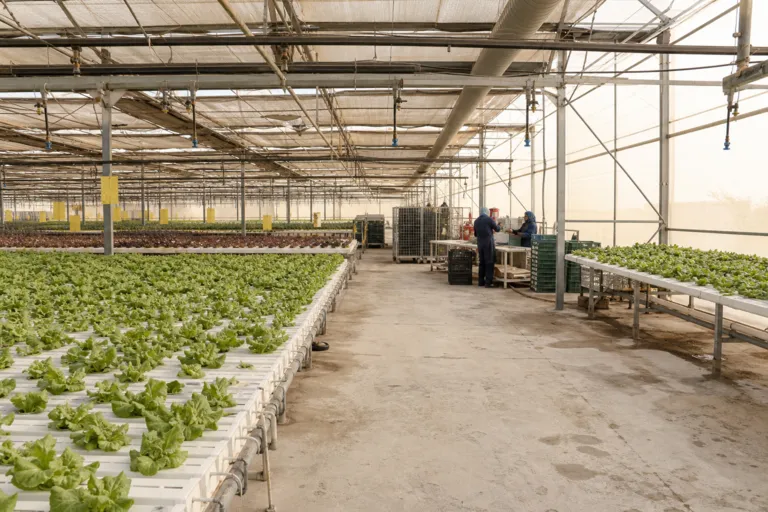
Controlled-environment agriculture (CEA) and greenhouse systems sit at the center of supply chain priorities because they stabilize volume and quality. Vertical farming examples include Dubai’s 330,000 sq ft Bustanica facility producing 1,000+ tonnes of leafy greens per year while using 95% less water than field farming. Another source says vertical farming adoption can reduce water consumption by up to 95%. Regulators also shape market access: MOHAP and the Emirates Authority for Standardization and Metrology are cited as enforcing food safety and quality benchmarks for domestic greenhouse operators. For suppliers, this pushes opportunities in compliant packaging, QA documentation, and temperature-controlled distribution that meets retailer and hospitality specifications.
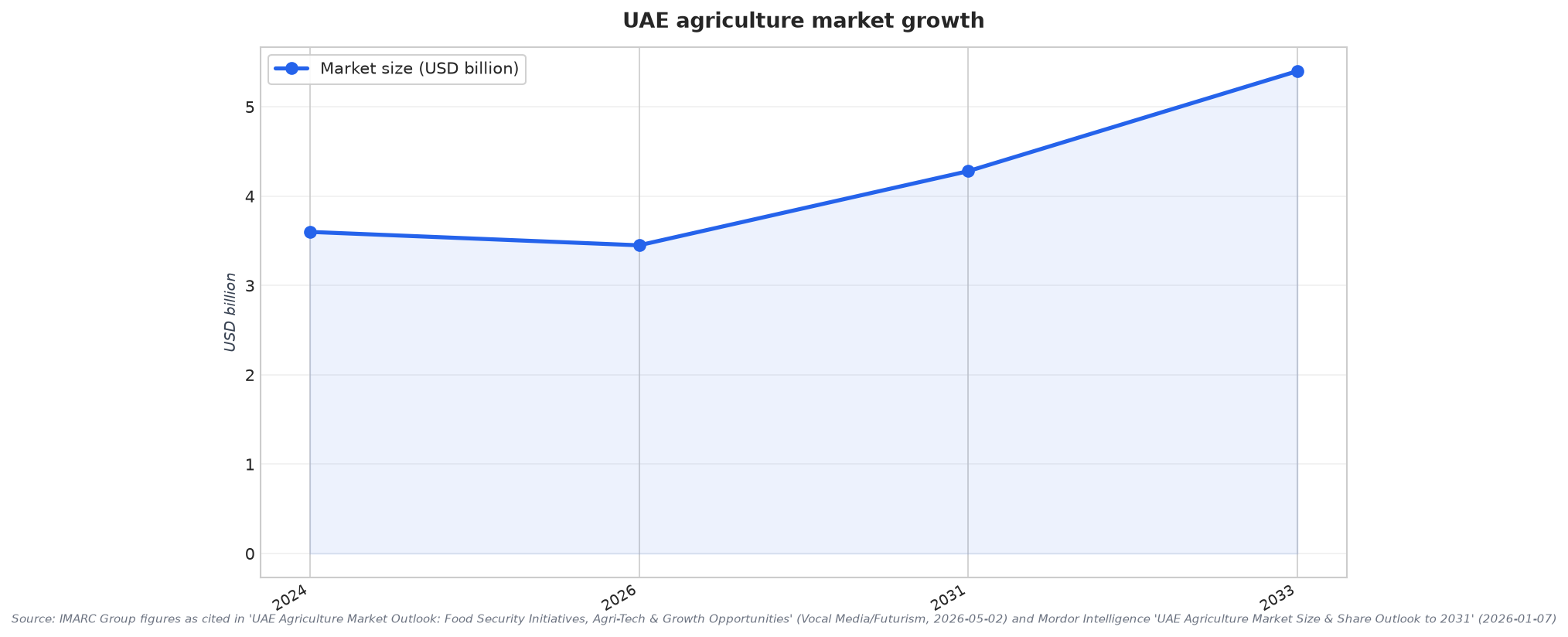
Food processing is another priority area connected to resilience and value-add. A U.S. government report describes the UAE Food Cluster as the first initiative launched under the National Cluster Strategy, aiming to increase the food sector’s contribution to GDP from $8.17 billion to $10.89 billion by 2028, while strengthening advanced food processing and food manufacturing. It also notes that manufacturers in the UAE typically source agricultural raw materials directly from international suppliers to maintain steady supply. That creates openings for Abu Dhabi suppliers who can support processors with ingredient logistics, storage, and traceability. In parallel, market commentary points to investment acceleration in vertical farming, aquaculture, controlled environment agriculture, food processing, and post-harvest infrastructure.
Agri-tech is becoming a procurement differentiator, not just a farm upgrade. ADAFSA’s technology push is cited as cutting national agricultural water use from 2 billion to 1.89 billion cubic meters, and AI-driven tools are described across planting guidance, irrigation monitoring, and predictive supply chain analytics that align fresh produce volumes with retailer needs. Drone-assisted crop management is also described as cutting manual labor requirements by up to 30%. On the Abu Dhabi investment side, the Abu Dhabi Investment Office is cited as allocating USD 100 million to agricultural technology start-ups, and Abu Dhabi’s Agwa cluster is described as expected to add AED 90 billion to Abu Dhabi’s GDP, attract AED 128 billion in investment, and create 60,000+ jobs. Suppliers can plug into these shifts by offering sensors, cold-chain services, greenhouse inputs, and systems integration that shorten lead times and reduce waste through better storage methods.
What does the UAE’s food security strategy for 2051 prioritize in the supply chain?
How import-dependent is the UAE for food today?
Which agri-tech areas create near-term opportunities for Abu Dhabi suppliers?
What major Abu Dhabi initiatives are linked to scaling food and agri-tech capacity?