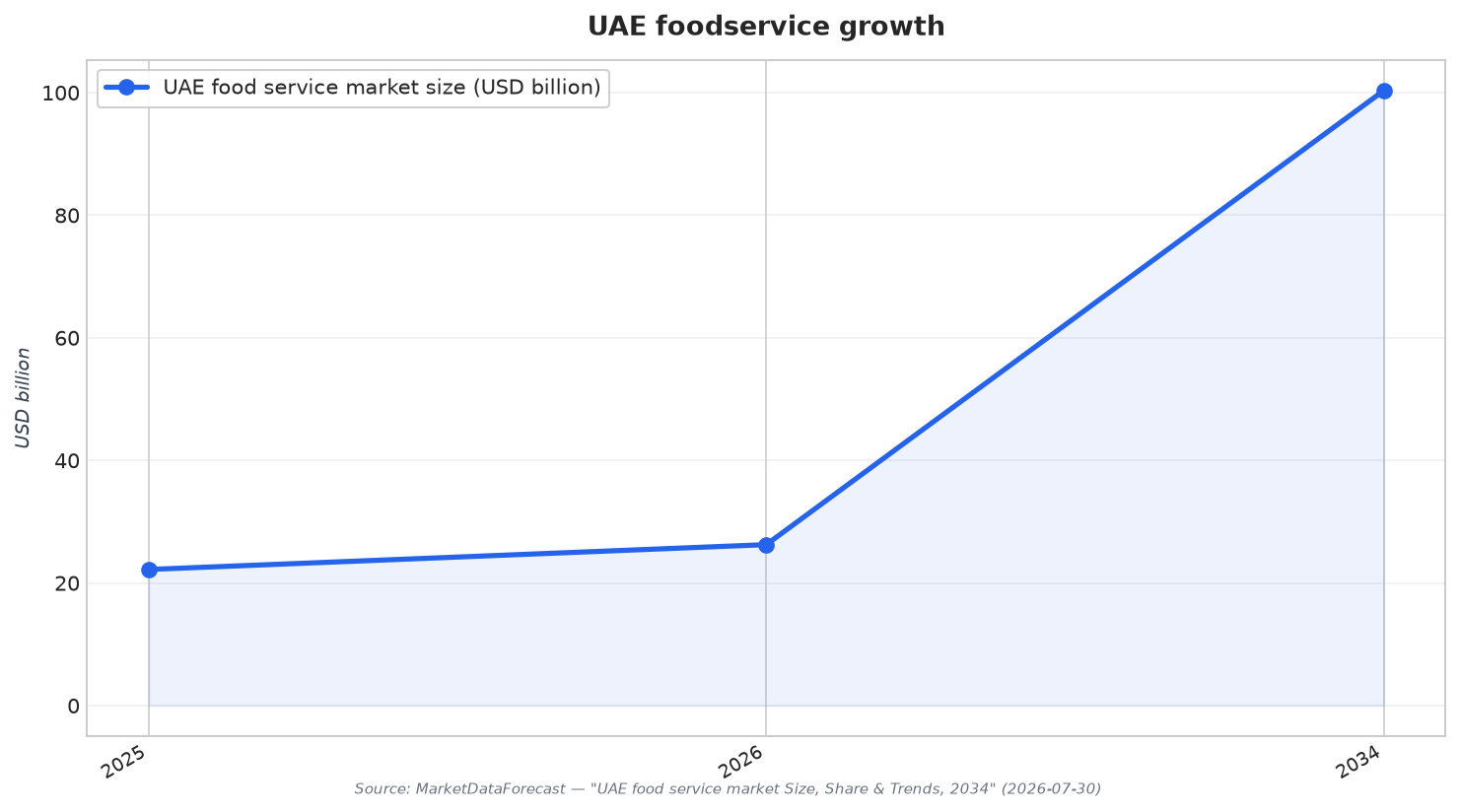
Operator interest in restaurants and fine dining in Abu Dhabi sits inside a UAE-wide growth story, where Dubai and Abu Dhabi are repeatedly cited as the country’s core demand engines. One forecast values the UAE food service market at USD 22.21 billion in 2025, estimates USD 26.26 billion in 2026, and projects USD 100.33 billion by 2034, implying an 18.24% CAGR for 2026–2034. Another estimate places the UAE food service market at USD 18.60 billion in 2025 and expects USD 56.09 billion by 2034 at an 11.71% CAGR for 2026–2034. These ranges are not Abu Dhabi-only figures, but they frame the expansion backdrop for operators evaluating the Abu Dhabi restaurant industry market.
Abu Dhabi demand is repeatedly linked to tourism programmes, corporate dining, and hotel-based restaurants, while the broader UAE market is also buoyed by population scale and visitor inflows. The Federal Competitiveness and Statistics Centre puts the UAE population at 10.23 million residents in 2024, with expatriates contributing to multicultural cuisine demand. Tourism is a key accelerator too, with Dubai recording more than 17.15 million international visitors in 2024, which sources describe as amplifying foodservice demand across the country. Mall-based foodservice remains structural: as of 2022, there were over 65 malls in Dubai and 15 in Abu Dhabi, supporting steady footfall for both premium concepts and more frequent, everyday occasions.
Consumer Preferences Are Splitting Between Convenience and Experiences
UAE consumer behavior is pulling operators in two directions at once. On one hand, quick-service restaurants (QSR) lead in format preference because of affordability and speed, with growth supported by value meals, drive-thru development, and delivery reach. Mordor Intelligence reports the UAE QSR market growing at a 19.55% CAGR through 2031, driven by digital transformation and shifting preferences, including menu customization, healthy alternatives, and regional flavors. On the other hand, dine-in remains a dominant channel in the UAE due to café culture, premium hospitality infrastructure, and experiential dining, especially in destinations tied to hotels, waterfront zones, and malls.
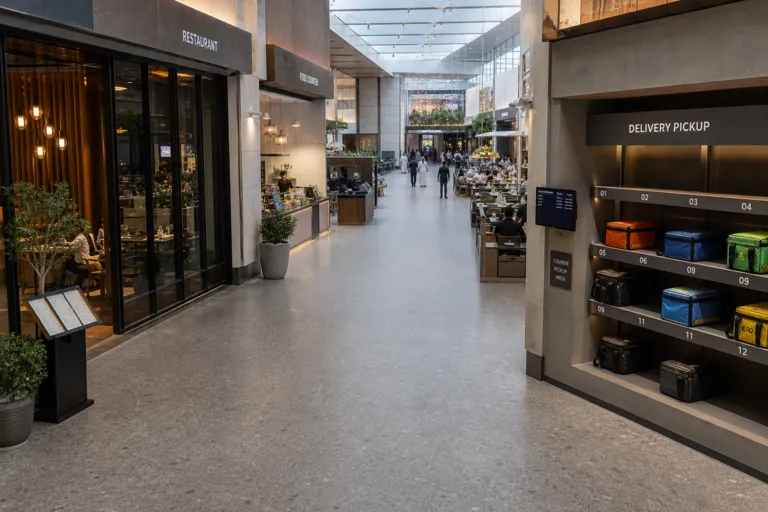
Digital ordering is also changing what “expansion” looks like for Abu Dhabi operators and franchisees. Sources highlight the rise of cloud kitchens and hybrid models that combine traditional restaurants with ghost-kitchen capacity, sometimes converting dining rooms into larger kitchen areas. One report notes that rising rental costs in prime areas in 2024 pushed some operators to shift space from dining areas to kitchens, reflecting evolving preferences and delivery demand. Another states that, in April 2024, Careem launched Careem Food and Careem Pay in Abu Dhabi, widening access to convenient meal ordering. This makes delivery-optimized production a practical route to test cuisines with lower capital intensity than a full dine-in rollout.
For franchise opportunities, Abu Dhabi benefits from being one of the two cities that dominate UAE foodservice activity, alongside Dubai, due to tourists, expatriate professionals, luxury hospitality, and higher spending capacity. Full-service restaurants are a major arena for franchise competition too: the UAE full-service restaurants market is valued at USD 11.26 billion in 2026 and is forecast to reach USD 25.97 billion by 2031 at an 18.19% CAGR, with a fragmented competitive landscape of international chains, regional players, and local independents. However, unit economics matter. Multiple sources warn that high labor, utility, and rent costs in Dubai and Abu Dhabi can be expensive, so franchise planning often needs a clear channel mix across dine-in, takeaway, and delivery.
What is the growth outlook around the Abu Dhabi restaurant industry market in UAE context?
What consumer trends are shaping restaurant formats in Abu Dhabi?
Why are operators redesigning restaurant space and kitchens?
What supports franchise expansion in Abu Dhabi compared with other emirates?