
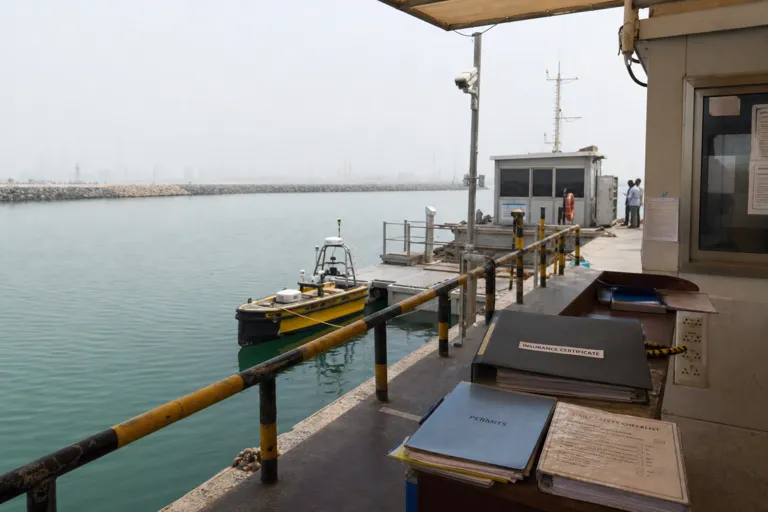
Abu Dhabi has moved to formalise how autonomous and remotely operated small marine vessels are tested in its waters. Under the supervision of the Smart and Autonomous Systems Council (SASC), the Department of Municipalities and Transport issued a comprehensive regulatory framework in coordination with the Integrated Transport Centre (Abu Dhabi Mobility), the body that regulates and oversees the emirate’s transport sector. The framework was adopted under Administrative Decision No. (17) of 2026 as the Manual of Requirements and Controls for Testing Autonomous Marine Crafts. Its stated purpose is to accelerate innovation while safeguarding maritime navigation, human life, property, and the marine ecosystem, and to align with global best practices and international regulatory standards.
For companies building autonomy, sensors, communications, or marine services, the commercial signal is clear: testing is no longer ad hoc. The manual establishes a mandatory permitting system to regulate all testing activities and ensure compliance with defined controls and procedures. It also sets out obligations for permit applicants and marine craft operators, and introduces structured processes intended to ensure testing is conducted safely, systematically, and without disrupting existing maritime operations. It further mandates appropriate insurance coverage and cybersecurity protections. In practice, this makes it easier for developers and investors to price risk and plan trials, because requirements are spelled out in advance rather than negotiated case by case.
What the New Manual Unlocks for Smart Mobility and Maritime Innovation
The framework also sits inside a wider local rulebook. It builds on Administrative Decision No. (69) of 2025, which introduced a unified bylaw covering maritime safety, operations, environmental protection, and stakeholder responsibilities across Abu Dhabi’s waterways, implemented in ongoing coordination between Abu Dhabi Mobility and Abu Dhabi Maritime. Commentary on the regime highlights that the inclusion of mandatory cybersecurity and insurance requirements signals a regulatory focus on operational resilience and risk allocation, not only technical capability. Dr Abdulla Hamad AlGhfeli, Acting Director General of Abu Dhabi Mobility, described the issuance as a “qualitative leap” intended to foster a comprehensive testing and incubator environment that stimulates innovation while maintaining high standards of safety and operational efficiency.
Commercial opportunity also depends on market pull, and UAE-wide indicators point to active procurement and expanding use cases. IndexBox’s UAE unmanned maritime system view characterises the market as import-dependent, with over 80% of system hardware sourced from North America, Europe, and Asia. It also notes that demand is concentrated in defence and offshore oil and gas applications, together accounting for 65–75% of total procurement, while commercial uses such as port security, environmental monitoring, and subsea inspection are growing from a smaller base. Average system prices are described as ranging from AED 1.2 million for mid-range payload-equipped USVs to AED 8 million or more for long-endurance, multi-mission platforms, with volume contracts often carrying 15–25% discounts.
Against that backdrop, Abu Dhabi autonomous vessels regulation is becoming a practical bridge from R&D to real-world operations. IndexBox also reports that around 30–40% of new tenders in the UAE now specify alternative power systems, and that the electronic content share of each system is shifting from 40% to 60% as AI-based autonomy and real-time data processing expand. It adds that at least four major international UMS manufacturers have established regional support hubs in Abu Dhabi and Dubai since 2022, reducing mean-time-to-repair by 20–30%. MarketsandMarkets separately estimates the UAE unmanned underwater vehicle market at $182.6 million in 2026, projecting $265.3 million by 2031 at a 9.6% CAGR. For operators and suppliers, the new Abu Dhabi testing pathway can help convert this broader momentum into deployable, insurable, and compliant services.
What did Abu Dhabi introduce for testing autonomous marine craft?
How does the permitting system affect companies running trials?
Why are insurance and cybersecurity specifically mentioned in the framework?
How does the UAE unmanned maritime market context relate to the opportunity in Abu Dhabi?
What does Abu Dhabi’s autonomous vessels regulation mean for moving from R&D to deployment?