
The clearest umbrella signal for Abu Dhabi PPP projects 2026 is the emirate’s established Public-Private Partnership (PPP) framework being used to channel private capital into infrastructure. At Abu Dhabi Infrastructure Summit (ADIS) 2026, the Abu Dhabi Investment Office (ADIO) was described as enabling global investors to access infrastructure opportunities through that framework. The same source ties this structured approach to long-term private sector participation and sustainable funding for a US$57 billion pipeline. For bidders, that matters because it points to repeatable procurement logic, not one-off deals, and it frames transport and infrastructure packages as investable, long-duration opportunities.
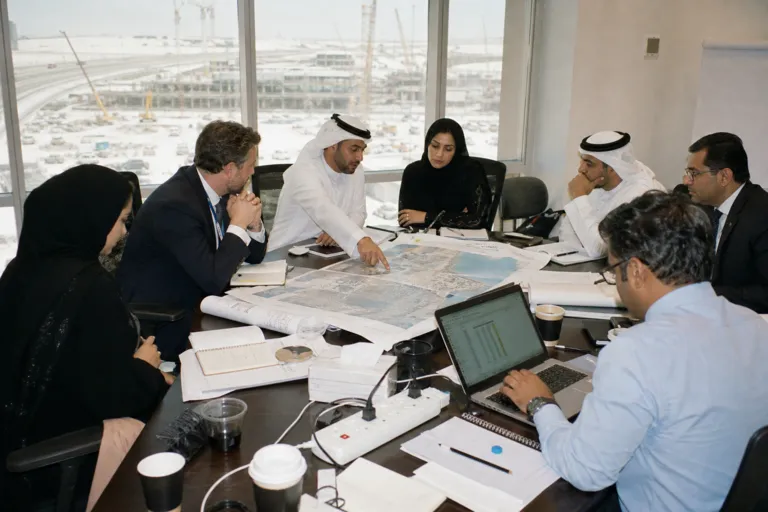
ADIS 2026 also functions as a market-making venue where partners align before tenders mature. The Abu Dhabi Projects and Infrastructure Centre (ADPIC) assembled a coalition around the US$57 billion infrastructure drive, with participants including Modon, Aldar, Bloom Holding, and ADIO. The 2026 event took place at ADNEC from 12–14 May and was expected to host over 7,000 industry leaders. The summit coverage states it spans the entire infrastructure value chain, from megaproject governance and digital systems to project financing and urban mobility. For transport bidders, “urban mobility” in that value-chain framing is a practical watchpoint for near-term pipeline shaping.
Bidder Opportunity Map: Where to Track Demand Signals
A bidder opportunity map for 2026 should also include adjacent award programs that can absorb contractors, EPC capacity, and project finance attention. ADNOC announced it will award 200 billion dirhams (US$55 billion) in new projects between 2026 and 2028, and described a shift into an execution phase defined by scale. In parallel, ADNOC plans to launch “ADNOC Value Connect” during the 2026 Make it in the Emirates forum, described as a “meet the buyer” platform connecting over 1,000 companies with ADNOC’s primary suppliers and EPC contractors. Even when a package is not a PPP transport tender, this scale can affect bidder bandwidth, pricing, and partner availability across infrastructure markets.
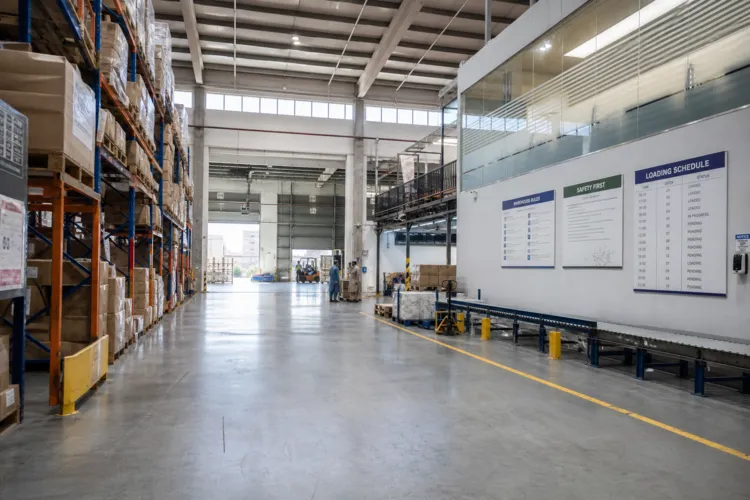
Port and logistics expansion is another area bidders can monitor when assessing transport-related opportunity density. AD Ports Group reported 2025 revenue of AED 20.8 billion and net profit of AED 2.1 billion. It also referenced the addition of 3.3 km2 of net new industrial land leases in Khalifa Economic Zones – Abu Dhabi (KEZAD), plus specific transactions and assets such as an AED 840 million land sale agreement for a 1.0 km2 plot within the 16 km2 KEZAD Town Centre and a 450,000 m2 Metal Park launch. These figures do not define a PPP tender list, but they do signal active, scaled industrial-logistics nodes that can generate demand for access roads, mobility integration, and supporting infrastructure interfaces.
Capital formation and long-term partnership models are being emphasized alongside physical build-out. A global investor group including Abu Dhabi’s L’IMAD and ADNOC is launching a US$30 billion infrastructure push across the Gulf and Central Asia, targeting long-term, stable returns, with BlackRock’s Global Infrastructure Partners and Singapore’s Temasek in the consortium. Separately, ADNOC secured US$11 billion in financing tied to future gas production from fields offshore in Abu Dhabi, with the financing arranged by more than a dozen banks. For bidders mapping Abu Dhabi PPP projects 2026, the practical takeaway is to prepare for investor-grade governance and bankable structures, because the public narrative repeatedly stresses scale, sustainability of funding, and performance-based partnerships.
Finally, watch for institutional coordination that can accelerate how projects reach market. ADIO and ADPIC were reported as launching a unified model to accelerate public-private partnerships. In the industrial efficiency initiative referenced in that coverage, assessments were concluded for 12 industrial facilities with work underway at more than 14 others, with a goal to finalize evaluations for around 50 facilities by the end of 2025 and complete remaining assessments in 2026. While this is not a transport tender, it demonstrates a pattern: defined targets, sequenced timelines, and a 2026 completion window. For bidders, that planning style can be a useful proxy for how future infrastructure workstreams are packaged, timed, and moved through approval into procurement.
What does “Abu Dhabi PPP projects 2026” refer to in this opportunity map?
Which institutions are highlighted as key to Abu Dhabi’s PPP access for investors and bidders?
Why should transport and infrastructure bidders pay attention to ADIS 2026?
What is ADNOC Value Connect and why does it matter to bidders?
What transport-adjacent signals appear in the ports and logistics data?