
The Abu Dhabi maritime industry outlook for 2026 is tightly linked to AD Ports Group performance across ports, maritime services, and logistics. In 2025, AD Ports Group reported record revenue of AED 20.8 billion, up 20% year-on-year, and net profit of AED 2.1 billion, up 17% year-on-year. Capt. Mohamed Juma Al Shamisi said the group strengthened core infrastructure platforms, advanced a corridor-focused international strategy, and generated positive free cash flow for the full year ahead of guidance. Operationally, growth was driven by container throughput in terminal operations, activity across maritime businesses, and additional industrial land leases in Khalifa Economic Zones – Abu Dhabi (KEZAD).
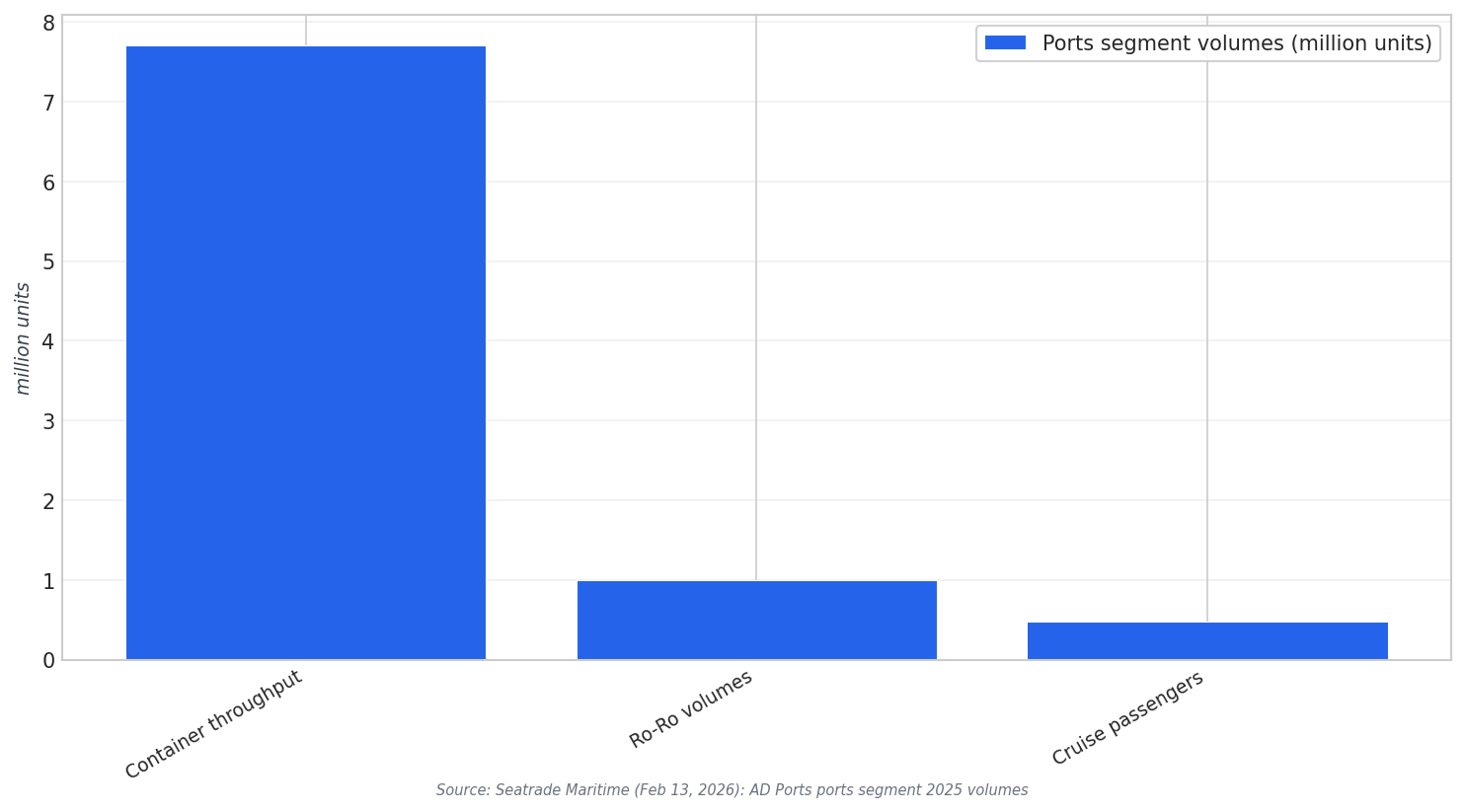
At the ports level, AD Ports’ ports segment recorded 23% growth in container throughput to 7.7 million teu in 2025. This came alongside a 29% contraction in ro-ro volumes to 1 million units, and a 10% fall in cruise passengers to 474,000. The same 2025 ports segment reported revenue of AED 2.86 billion, up 21%, driven mainly by 59% growth in container revenues and a 33% increase in bulk and general cargo operations, plus contributions from CMA Terminals Khalifa Port. These figures show a container-led growth profile heading into 2026, with other segments moving in a different direction.
Khalifa Port and Corridor Connectivity: What Changes by 2026
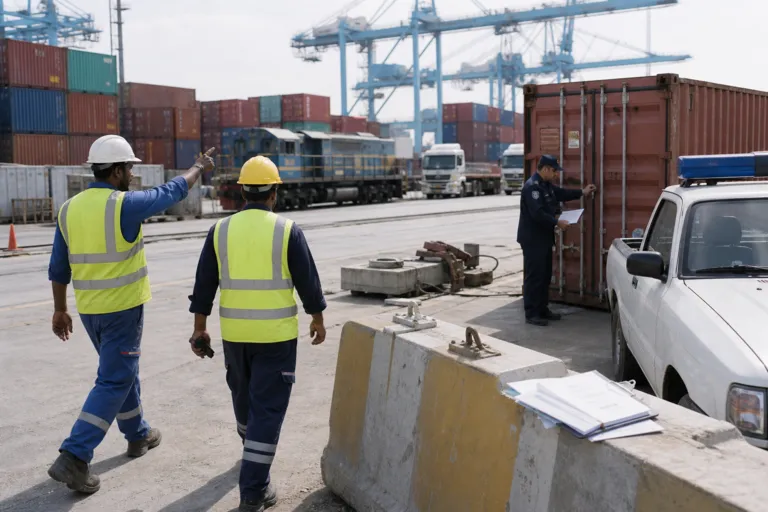
Khalifa Port remains the anchor asset inside AD Ports’ container terminal footprint. AD Ports’ container terminal business was described as UAE-heavy, with Khalifa Port accounting for 9.6 million teu of its 12.1 teu global capacity, and 86% of the group’s containers handled in the UAE. Early 2026 updates also showed how corridor and inland connections are being built around this port base. In Q1 2026, AD Ports established a land bridge to transport cargo from Fujairah and Khorfakkan through bonded customs corridors across the UAE to Khalifa Port, Jebel Ali Port, and Sharjah, using 800 trucks and four new daily rail services by Etihad Rail.
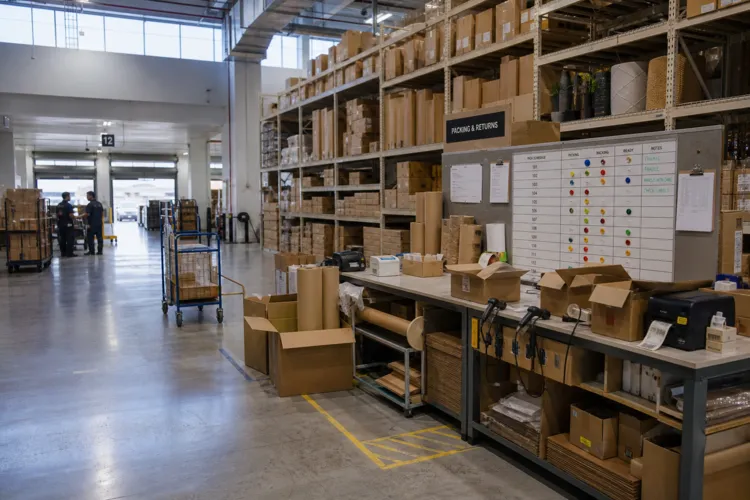
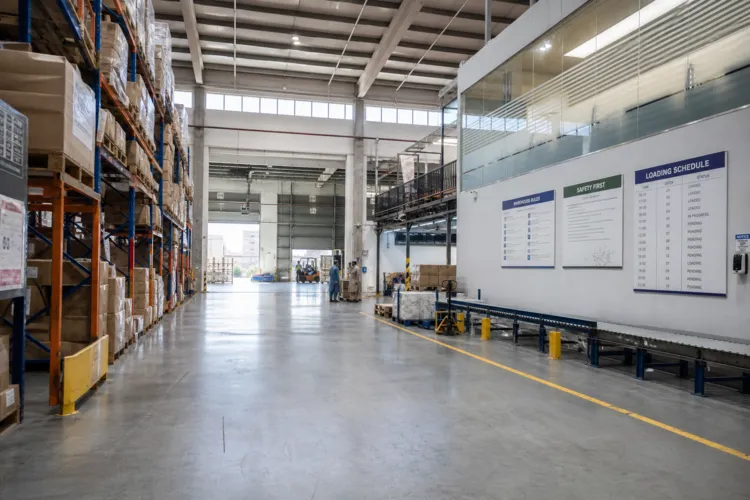
Trade corridor execution in 2026 also depends on storage and resiliency. AD Ports reported expanded warehousing and storage capacity for essential goods exceeding 76,000 m2, with plans to more than double to 188,000 m2. In the Ports Cluster in Q1 2026, UAE operations faced pressure, with quarterly container throughput declining 5% year-on-year and general cargo volumes dropping 23% year-on-year. These declines were largely offset by strong growth internationally of 17% year-on-year and 21% year-on-year, respectively. Capacity utilisation figures added context: container capacity utilisation stood at 54% in the UAE (57% at Khalifa Port), while internationally it reached 65%, up from 58% in Q1 2025.
Beyond terminals and corridors, the maritime services base expanded into 2025 and supports the 2026 outlook. The Maritime and Shipping cluster led with revenues of AED 10.7 billion, up 33% year-on-year, and increased its share of AD Ports revenue to 51%. The cluster’s marine services fleet reached 81 vessels, up from 66 in 2024. The multipurpose and ro-ro fleet grew from 28 ships in 2024 to 60 at the end of 2025, including 11 vessels added from the United Global Ro-Ro (UGR) joint venture. In 2026, AD Ports stated that Ports and Economic Cities & Free Zones would remain the backbone of its infrastructure-led growth strategy, while Maritime & Shipping and Logistics would continue to build scale to connect infrastructure assets and offer end-to-end solutions.
What is the Abu Dhabi maritime industry outlook for 2026 based on AD Ports updates?
How did AD Ports’ container throughput perform in 2025?
How central is Khalifa Port to AD Ports’ container terminal capacity?
What trade corridor steps did AD Ports highlight in Q1 2026?
What were key Q1 2026 capacity utilisation figures mentioned for the Ports Cluster?