
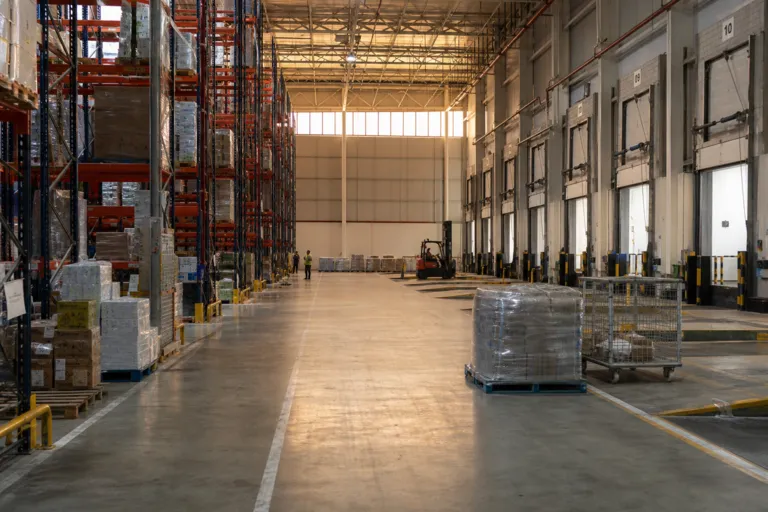
Abu Dhabi logistics real estate enters 2026 with the hallmarks of a tight, quality-led cycle. Multiple market updates point to high utilization in Grade A stock and a clear preference for modern facilities in strategic locations. Cushman & Wakefield Core reported occupancy at 95% across Grade A assets, alongside 13% year-on-year growth in Abu Dhabi industrial rents. GH Capital also characterized Abu Dhabi as “tighter,” noting KEZAD reported 98% occupancy across its managed industrial portfolio by end-2025, and that industrial rent growth in Abu Dhabi over the past two years exceeded 50% cumulatively. Together, those signals frame why occupiers and investors continue to prioritize specification, cluster location, and reliable availability.
The “KEZAD effect” in 2026 is not just about branding. It is about where demand anchors and where pricing power concentrates. Knight Frank’s H2 2025 UAE Industrial and Logistics Report said market conditions in Abu Dhabi were likely to remain broadly stable through 2026, with demand anchored around the ICAD and KEZAD clusters as the emirate’s principal industrial and manufacturing base. The same report highlighted how rent levels differ by submarket: Abu Dhabi Airports Free Zone averaged AED 625 per sq m, while KEZAD Mussafah (ICAD) and Al Falah averaged AED 550 per sq m, and Mussafah averaged AED 500 per sq m as at end-Q4 2025. Arabian Business also reported KEZAD Mussafah (ICAD) as the emirate’s most expensive industrial and logistics submarket, with rents rising 15% year-on-year to AED 630 per sq m.
Grade-A Warehousing Demand in 2026: Bigger, More Selective, More Location-Led
Demand signals across the UAE in 2025 and H1 2026 show a market that is still expanding, but increasingly selective on quality and fit. Knight Frank’s H2 2025 report said demand was heavily skewed toward mid-sized warehouses of 10,000–50,000 sq ft, which accounted for 58.1% of requirements, followed by 50,000–100,000 sq ft at 22%, while facilities above 100,000 sq ft accounted for 7.8% of new demand in 2025. In Dubai in H1 2026, Knight Frank recorded 12.3 million sq ft of new industrial and logistics requirements, up from 11.5 million sq ft in the same period last year, with manufacturing and industry at 35.1% of requirements and logistics occupiers at 15.5%. In that Dubai snapshot, demand for facilities exceeding 100,000 sq ft rose to 27% from 7.8% in H2 2025, illustrating how larger, efficient formats can move into focus as occupiers reassess operations and expansion plans.
New supply is coming, but the timing and composition matter for Grade A choice and pricing. Cushman & Wakefield Core said the next wave of supply in Abu Dhabi, led by KEZAD, ADAFZ, and Musaffah, would add more than 335,000 sq m of speculative space in 2025, followed by an additional 110,000 sq m in 2026. Knight Frank’s H2 2025 report also pointed to an investment and development pipeline, stating that in Q1 2026, industrial project completions in Abu Dhabi were expected to exceed US$ 1bn, and that forward forecasts suggest another peak in Q1 2029 with project values approaching US$ 1.2bn. In parallel, Knight Frank’s H1 2026 market commentary described a sector moving toward a healthier supply-demand balance, with rental performance becoming increasingly differentiated by location and asset quality as occupiers become more sensitive to specification and value.
For decision-makers in 2026, the practical takeaway is that performance will be won at the submarket and asset level, not by broad averages. Knight Frank emphasized fragmentation in rental outcomes across the UAE as occupiers prioritize efficient, modern facilities in strategic locations. That aligns with the Abu Dhabi picture where KEZAD and ICAD remain central reference points, with reported high occupancy and visible rent gradients across submarkets. It also aligns with the wider UAE context of shifting supply chains: Knight Frank cited shipping disruption through the Strait of Hormuz sharpening the focus on alternative logistics and shipping solutions, including DP World’s announced partnership with the Port of Fujairah to develop two deep water ports on the UAE’s east coast. In that environment, Grade A warehousing decisions increasingly tie back to cluster access, operational resilience, and the ability to secure the right unit size when availability is constrained.
What is driving the 2026 outlook for Abu Dhabi’s logistics and industrial market?
How does KEZAD influence demand and pricing in Abu Dhabi?
What warehouse sizes are most in demand, based on recent UAE requirements data?
How much new speculative industrial space is planned for Abu Dhabi in 2026?
What does the 2026 data suggest about Abu Dhabi logistics real estate decisions?