
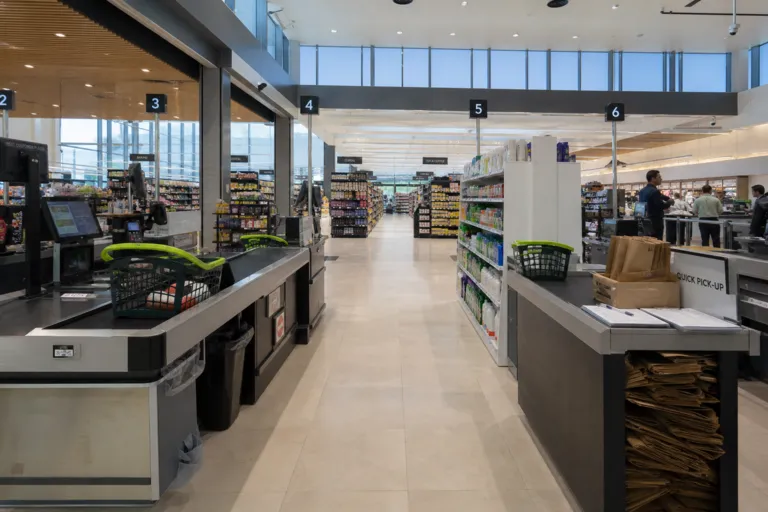
Supermarket and grocery retail in Abu Dhabi should be read in the context of the wider UAE retail landscape, where multiple sources point to structural and consumer shifts happening at the same time. One UAE-focused overview values the UAE grocery retail market at US$40 billion in 2023 and projects a 6.5% CAGR over the following five years. In that same UAE framing, hypermarkets and supermarkets account for approximately 85% of total consumer spending, while e-commerce represents about 15% but is described as the primary driver of recent growth. Those figures are UAE-wide, not Abu Dhabi-only, but they signal the operating environment in which Abu Dhabi grocery operators compete on range, price, and convenience.
Demand dynamics in the UAE also show why grocers are adjusting formats and service models. A UAE consumer-economy note reports that in March 2026 the UAE saw an approximate 12% drop in its expatriate population, with recovery expected over the next 24 months and not in a single wave. It also states that essential retail, including grocery and quick retail, is recovering faster as households stabilise, while e-commerce follows on sustained digital adoption. For Abu Dhabi stores and delivery players, this implies that store-based value perception and digital convenience are both needed, because recovery patterns can vary by consumer group and timing, even when overall demand is described as resilient.
Private Labels and Quick Commerce Are Resetting the Shelf
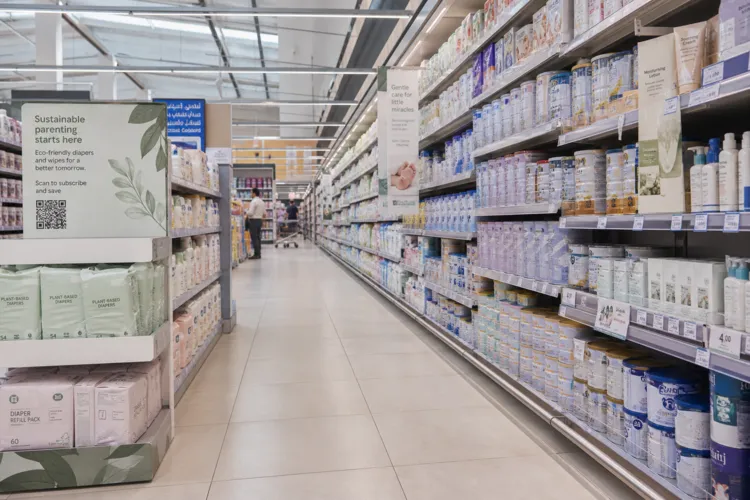
Private label is one of the clearest battlegrounds in the region, and it intersects with online grocery’s shift toward quick commerce. Across the GCC, private labels already contribute over 25% of sales in large grocery chains, and quick commerce platforms are now building their own product portfolios. This is not an Abu Dhabi-specific percentage, but it provides a relevant benchmark for what large chains and app-led platforms can achieve when they combine value pricing with owned-brand visibility. Within the UAE supermarket market discussion, private label expansion is repeatedly listed as an opportunity alongside e-commerce growth, organic demand, and retail technology, reinforcing that owned brands are becoming a strategic lever rather than a side project.
Format shifts are also visible through how shoppers fill their baskets and how often they shop. A UAE supermarket landscape summary lists “smaller basket sizes with more frequent trips” as a leading consumer trend, with shoppers prioritising convenience and freshness over bulk buying. The same source highlights increased price sensitivity, describing a shift toward budget-friendly options and discounted items as many consumers actively seek deals and cheaper brands. It also points to a growing preference for online grocery shopping, especially among younger shoppers. For grocery retailers serving Abu Dhabi, these UAE-wide signals suggest assortment, promotions, and pack sizes must fit trip missions that are shorter, more frequent, and more price-aware.
Finally, grocery sits inside a broader UAE FMCG context that helps explain category priorities and supply-side realities. One UAE FMCG overview estimates the UAE FMCG market in the range of USD 16 billion to USD 18 billion in 2026, with an approximate CAGR of 4.5% to 5.5% from 2022 levels, and describes these figures as directional industry estimates. In that same UAE view, food and beverages account for roughly 65% to 70% of total FMCG spend, and the UAE imports approximately 85% to 90% of its food requirements. For the Abu Dhabi grocery retail market, those UAE-level ratios matter because they reinforce how central food is to household spending, and why availability, pricing, and supply consistency remain core differentiators across stores and online channels.
What is changing fastest in Abu Dhabi’s grocery retail environment?
How important are private labels for grocery retailers serving Abu Dhabi?
What do UAE trends suggest about shopper basket behavior?
How does the UAE’s population shift affect grocery retail planning?
What is the broader UAE context around food spending that matters for the Abu Dhabi grocery retail market?