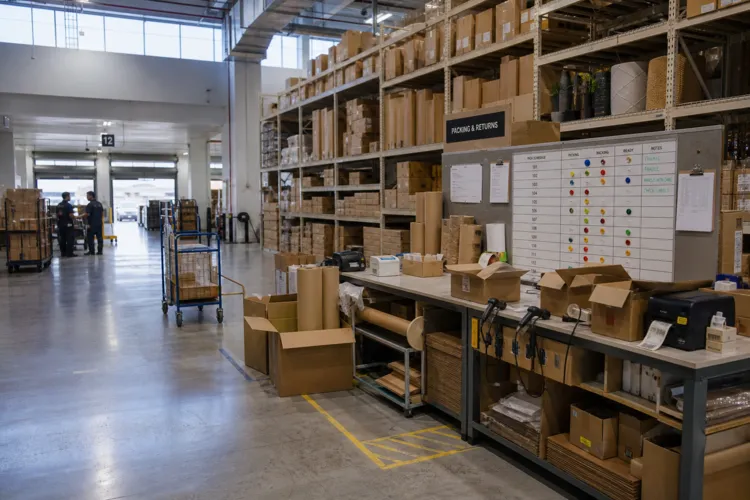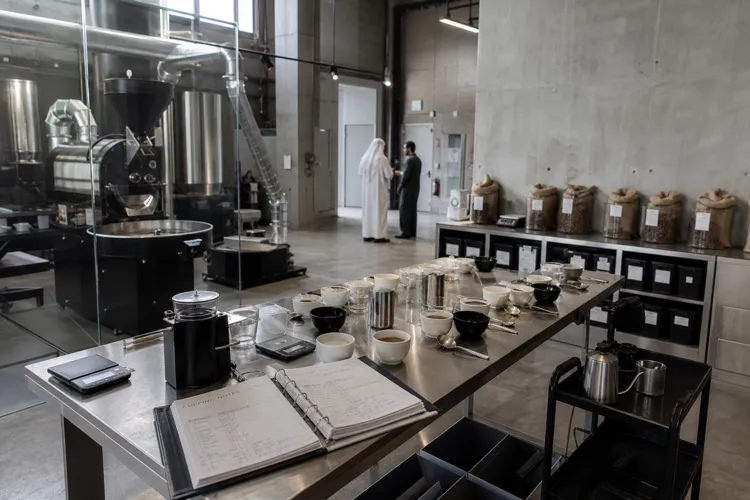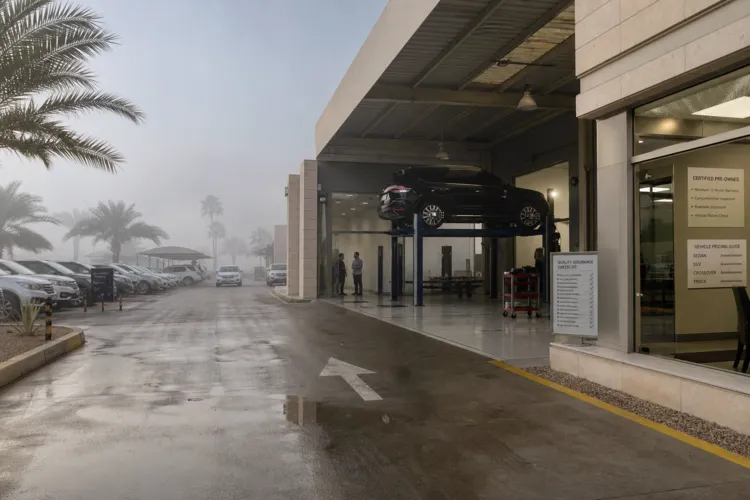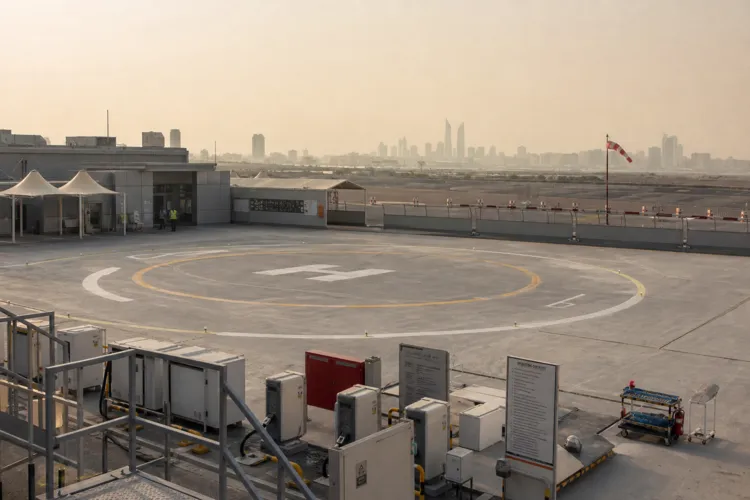

Abu Dhabi Industry 4.0 adoption is increasingly tied to how the emirate grows industrial capacity and upgrades operations. The Abu Dhabi Industrial Strategy (ADIS), launched in 2022, advances the sector through targeted programmes that include talent development, homegrown supply chains, ecosystem enablement, value chain development, Industry 4.0, and circular economy initiatives. In 2025, the number of new industrial establishments moving to full operation increased by 53 per cent to reach 115, up from 75 in 2024. This type of growth matters because it expands the base of factories that can standardise digital practices, connect equipment, and scale modern automation approaches.
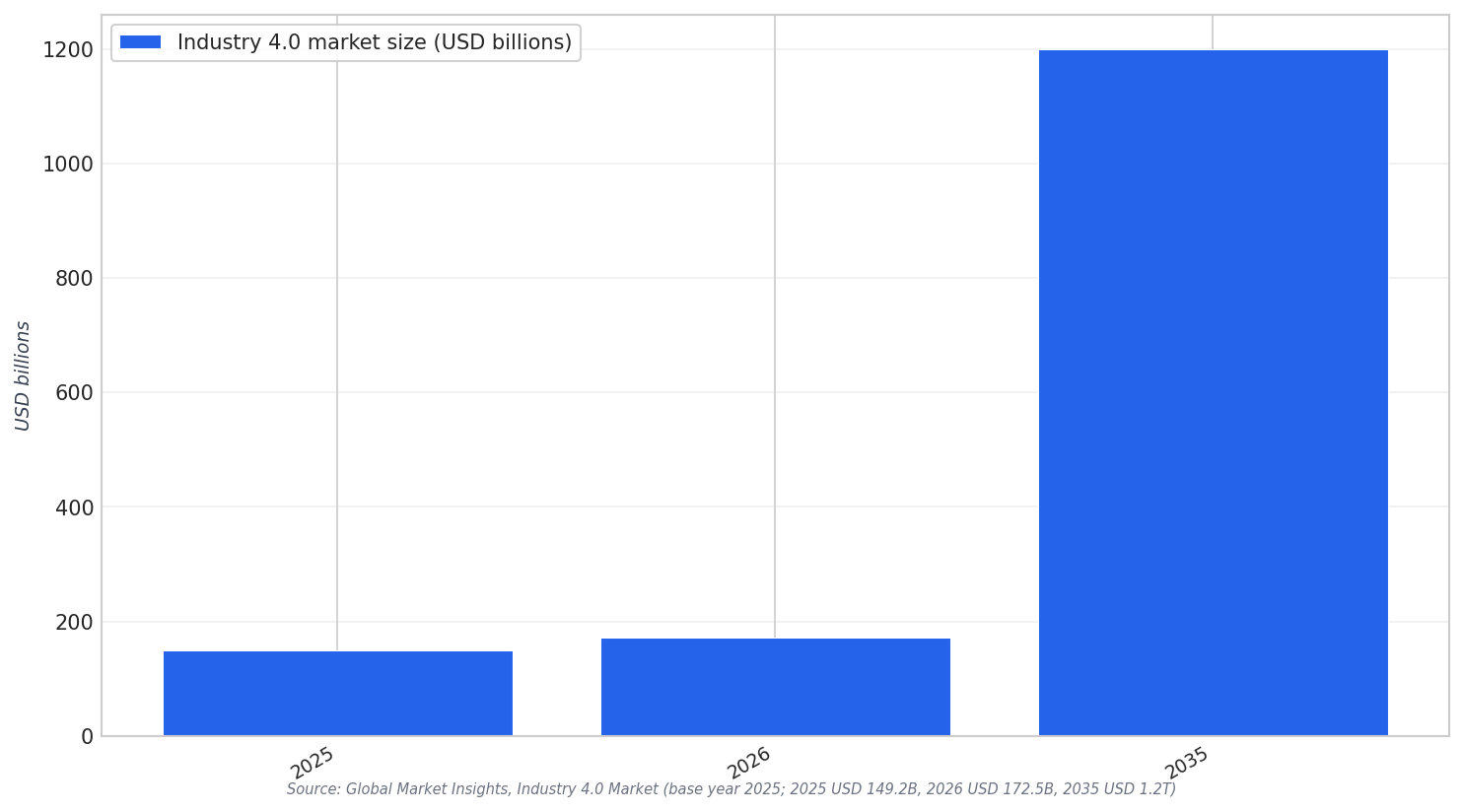
The broader market context shows why smart factory capabilities are becoming a board-level priority. Global Market Insights lists the Industry 4.0 market size at USD 149.2 billion in 2025 and USD 172.5 billion in 2026, with a 2035 market size of USD 1.2 trillion. In the same source, IoT dominates the technology mix with a 28% market share in 2025, and it is associated with a 24.1% CAGR during the forecast period. For Abu Dhabi, these global indicators do not replace local metrics, but they help frame the scale of the technology wave that local industrial players are adapting to.
Smart Factories Need IoT, AI, and Secure Connectivity
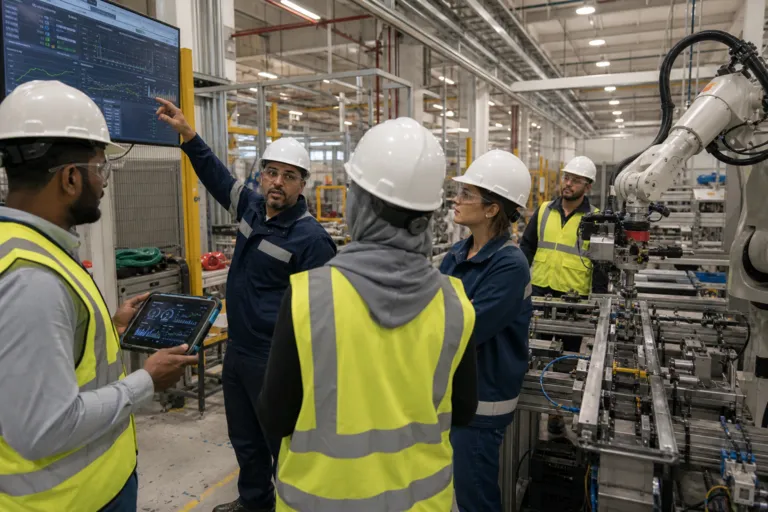
Smart factories depend on connected sensing and control, and that is where IoT and AI become practical, not theoretical. A smart factory security analysis describes IoT devices as the sensory layer of the modern factory, including smart controllers, cameras, and edge computers that collect streams of data to improve uptime and efficiency. The same source says market research predicts IoT devices will more than double from 19.8 billion in 2025 to 40.6 billion by 2034, which also expands the attack surface as networks grow. It also states that 95 percent of manufacturers worldwide have invested in AI or plan to implement tools in the next five years, reflecting how AI is used to turn sensor data into real-time decisions.
Robotics and software-defined operations are often evaluated through ROI claims and cost or efficiency expectations. An Automotive World analysis cites examples where Nissan is already claiming a 20% energy savings, Mercedes expects a 10% drop in production costs, and Audi is optimistic for a 50% improvement in efficiency. The same piece also notes that the global smart factory market is forecast by MarketsandMarkets to rise from US$104.42bn in 2025 to US$169.73bn by 2030. These figures are global and company-specific, but they highlight the value themes that influence adoption decisions: energy consumption, productivity, and efficiency, supported by robotics, sensors, edge computing, and AI.
Across priority sectors in Abu Dhabi, Industry 4.0 alignment also connects to national-level industrial positioning and operational efficiency. A World Oil report on UAE strategy says the country is embedding artificial intelligence across industrial operations to improve efficiency, while positioning its energy strategy on a dual-track approach. In the same report, Masdar is described as having reached 65 GW of installed renewable capacity globally, about two-thirds of its 100-GW target by 2030. Separately, Abu Dhabi’s industrial policy messaging links ADIS with national priorities such as strengthening supply chains, increasing local manufacturing capacity, and attracting global industrial leaders. Taken together, these signals point to Abu Dhabi Industry 4.0 adoption being shaped by factory growth, connected operations, and the practical integration of IoT, AI, and robotics with resilience and security in mind.
What does Abu Dhabi Industry 4.0 adoption mean in practice?
Which technology leads the Industry 4.0 market by share?
How fast is the number of IoT devices expected to grow?
What are examples of smart factory ROI claims mentioned in the sources?
How large is the Industry 4.0 market projected to become?