
The Abu Dhabi green building market is being pulled forward by a mix of regulation, corporate sustainability goals, and practical procurement changes. In the UAE, net-zero ambition is visible in policy direction and in how builders evaluate both operational energy and embodied carbon. One consistent theme is that materials alone cannot close the gap. A 2025 industry view notes that lower-carbon materials will not deliver net-zero buildings without adequate insulation, efficient design, and low-carbon energy, because performance gaps remain wide. That context matters in Abu Dhabi, where building performance upgrades and cleaner electricity are being promoted alongside greener material choices.
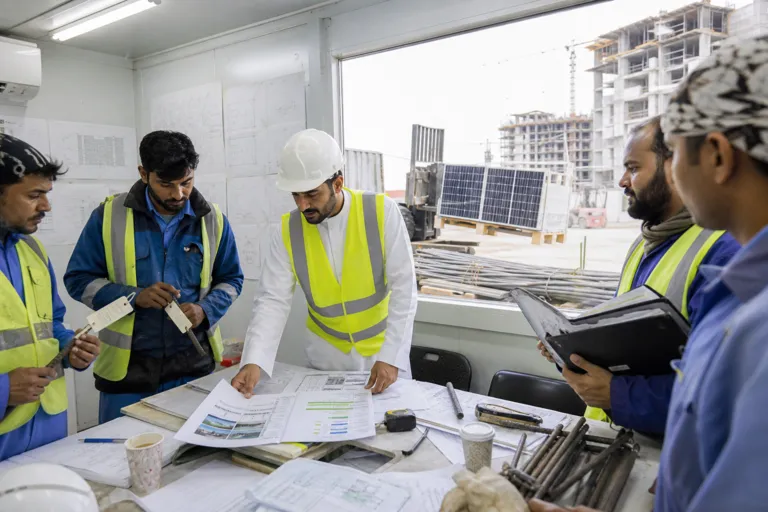
Material demand is also being driven by active construction cycles. Fastmarkets reported that monthly rebar demand in the UAE grew from 350,000 tonnes in January to 500,000 tonnes in November, with market participants linking the increase to strong construction activity. At the same time, interest in certified low-carbon steel is rising as regulators tighten standards. This creates a dual signal for developers and contractors: volumes are increasing, but so are expectations around documented emissions performance. For procurement teams, this combination can shift supplier qualification, tender language, and product selection toward certified low-carbon options.
Net-Zero Targets Meet Real-World Supply Limits
On the supply side, the transition to low-carbon and net-zero materials is happening, but it comes with constraints. Fastmarkets highlighted Emirates Steel Arkan’s subsidiary AGSI, describing installed capacity of 720,000 tonnes of billet, 960,000 tonnes of rebar, and 240,000 tonnes of sections. AGSI also estimated it can meet only about 15% of the UAE’s long-product demand with certified Net-Zero Steel, even with expanded output. It produces Net-Zero Steel using a fully electric steelmaking route based on 100% locally recycled raw materials, and the platform earned “Sustainable Product of the Year – Construction Material” at the Middle East and North Africa Green Building Awards in November.
Green buildings are also influenced by how the grid evolves and how much clean power can be brought behind the meter. In Abu Dhabi, a new self-supply solar and battery policy aims to accelerate net-zero goals, and the Department of Energy emphasized energy efficiency as a first step. Residents and businesses are encouraged to upgrade to energy-efficient appliances and improve building performance to reduce overall electricity consumption before installing solar systems. In the wider UAE context, GlobalData analysis reported the country installed approximately 1 GW of solar in 2025, with cumulative solar capacity rising from 5.7 GW at end-2024 to around 6.7 GW by end-2025. Together, these signals support more electrified and efficient building designs.
Financing and market narratives reinforce the shift. In Abu Dhabi, Masdar’s CFO said the company is deploying green finance on an “industrial scale,” noting green bonds as a pillar for its renewables ambitions. Forbes reported Masdar issued $750 million and $1 billion worth of green bonds in 2023 and 2024, and that in the past three years it has issued almost $3 billion worth of green bonds, including a $1 billion issuance in May split into two equal tranches of $500 million. At a global materials level, one market projection put the Carbon Neutral Construction Materials Market at USD 18.09 billion in 2025, projected to reach nearly USD 45.24 billion by 2035, expanding at a CAGR of 9.6%. This broader backdrop helps explain why Abu Dhabi buyers increasingly ask for verifiable, certified low-carbon inputs as part of green building delivery.
What is driving the Abu Dhabi green building market right now?
How fast is rebar demand rising in the UAE?
Can certified Net-Zero Steel cover all long-product needs?
What does Abu Dhabi’s self-supply solar policy emphasize for buildings?
What does green finance signal for clean energy and building-related demand?