

In the UAE, audience complexity and channel choice make disciplined testing a requirement, not a luxury. The country recorded 11.1 million internet users at the start of 2025 with 99.0% internet penetration, and smartphone penetration was reported at 95% going into 2026. Social behavior also concentrates attention: residents average 2 hours 58 minutes on social media daily, and Facebook shows nearly 30 hours per user per month in the cited dataset. For marketers planning Abu Dhabi campaigns, the point is practical. When most of the market is reachable through digital touchpoints, the risk shifts from “can we reach people?” to “are we saying the right thing to the right segment in the right language and format?”
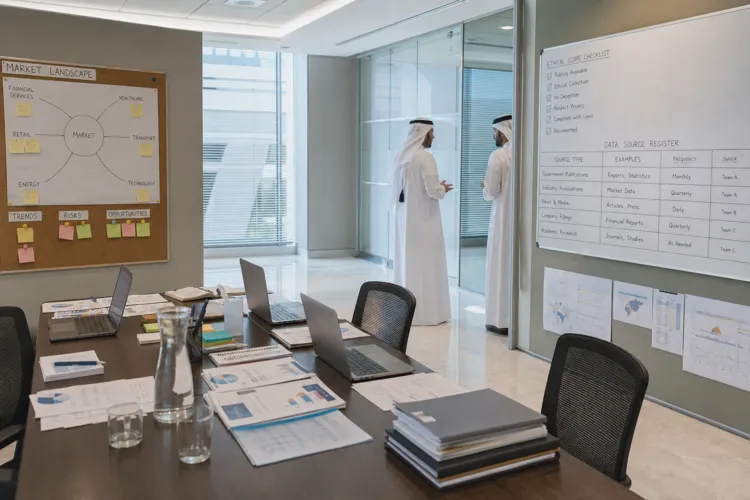
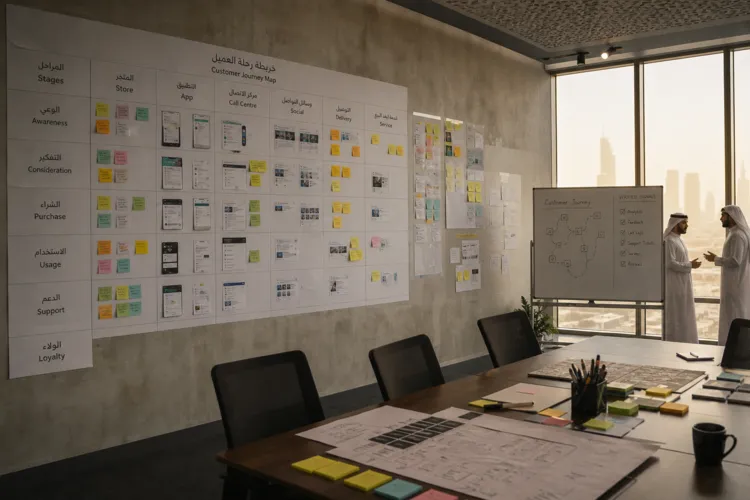
Pre-campaign work should start with what one source calls “audience architecture,” and it matters because Dubai is not the whole UAE. The guidance is to define the business decision, identify the right audience, and ensure the sample reflects geography, including Abu Dhabi alongside other emirates. Method choices can then follow the question, including surveys, interviews, web intelligence, journey mapping, pricing research, and competitor analysis. In parallel, planning should reflect how budgets flow through the market. IMARC notes that new digital media like social media, search, and online video streaming are prioritized for measurable, targeted, cost-efficient campaigns, and that localized content often uses Arabic and English messaging as needed.
Designing Multicultural Creative Tests for Abu Dhabi
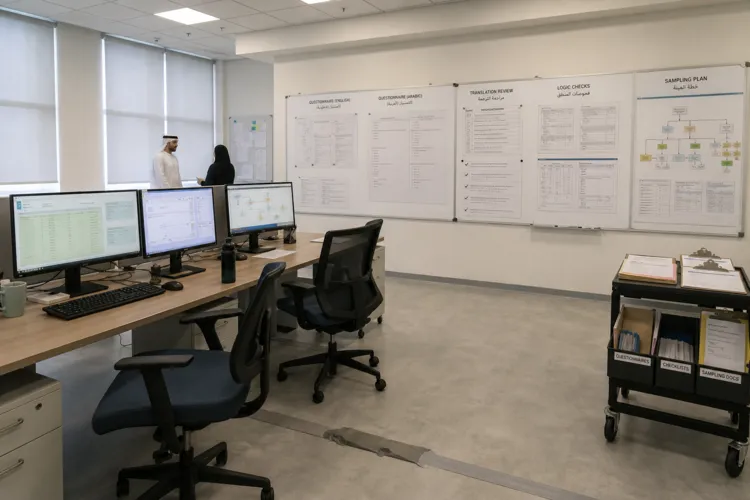
Multicultural testing in Abu Dhabi should treat language as a test variable, not a brand preference. One UAE campaign benchmark for Meta reports mid-range service CPL of 12–35 AED, and it states that a 5,000 AED test budget can generate 150–250 leads over four to six weeks, which is presented as enough volume to compare language performance meaningfully. The same source argues that Gulf Arabic and Levantine Arabic can read differently to their respective audiences, so brands with both GCC nationals and wider Arab expat targets should test both registers. It also warns that seasonality can change language fit, noting that Ramadan gym marketing almost exclusively targets Arabic-speaking audiences and that running English creative for Ramadan fitness campaigns misses core intent.
Channel testing also needs to match how the UAE media system buys and optimizes inventory. A digital advertising overview projects that 76% of UAE digital ad revenue will flow through programmatic channels by 2028, reinforcing the value of structured test-and-learn loops that can iterate fast. Cost context helps frame what to test first. One UAE pricing snapshot cites Meta ads at AED 10–40 CPM, radio spots at AED 450–1,600 per 30 seconds, and taxi wraps delivering CPMs as low as AED 0.20–0.80. For paid social and programmatic display in particular, those ranges make it feasible to run multiple controlled creative and audience splits before scaling a full-funnel plan.
Post-campaign research should not stop at clicks or leads; it should explain outcomes by segment and feed the next iteration. This is where ad testing research UAE teams can connect performance back to the original audience architecture, reading results by language, register, and emirate. Market sizing and investment trends underline why that discipline pays off: IMARC values the UAE advertising market at USD 3.38 billion in 2024 and expects it to reach USD 5.74 billion at a CAGR of 5.42% during 2025–2033. Another UAE report projects the UAE digital ad spend market to grow by 15.2% annually to $2.64 billion by 2026, and to expand to approximately $4.30 billion by 2029. In a market scaling at that pace, the brands that learn systematically from each campaign will compound their advantage.
How should Abu Dhabi brands start pre-campaign testing for multicultural audiences?
What UAE benchmark suggests a workable budget and volume for language-split ad tests?
Why test Arabic variants instead of only “Arabic vs English” in the UAE?
What programmatic trend supports faster creative iteration in the UAE?
What does ad testing research in the UAE aim to improve after a campaign ends?