
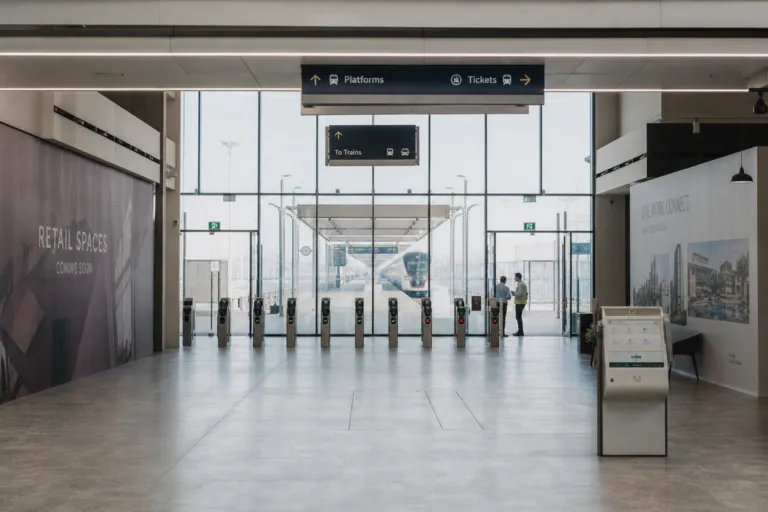
Etihad Rail has moved quickly from a long-planned national project into a live passenger proposition that is already changing how people plan trips inside the UAE. Reported demand includes over 70,000 tickets sold since the February 28, 2026 launch window mentioned in published coverage, alongside pre-booking behavior that averages 12 days in advance. Operational access is currently described through four depots: Fujairah, Sharjah, Abu Dhabi, and Al Dhannah. This early traction matters because it signals where the market is forming first: business commuters, families, and tour groups are repeatedly cited as filling peak weekend and holiday runs, which makes timetables, station access, and last-mile links part of the product, not an afterthought.
On the first inter-emirate passenger corridor, the Abu Dhabi to Fujairah route has become the initial demand barometer. Public reporting describes passenger services launching on June 30, 2026 between Abu Dhabi’s Mohamed bin Zayed City station and Fujairah, with a journey time of around 1 hour 45 minutes and trains designed to run at up to 200 kilometers per hour on sections of the network. Capacity cues also help frame route economics: published coverage states each passenger train can accommodate about 400 travelers. Early sales momentum was widely noted too, including a figure of more than 5,000 tickets bought in the first 48 hours for services beginning June 30, while promotional one-way fares starting from about 55 dirhams were referenced in local reporting.
Stations, Timelines, and the Real Estate Gravity of Rail
Network rollout timing is a key variable for both ridership and investment logic because station openings define which districts become “live” rail catchments first. One published schedule notes Dubai and Al Dhaid stations are set to open on September 30, 2026, followed by Liwa and Madinat Zayed services on November 30, 2026. Wikipedia’s timeline also references subsequent openings including Al Dhafra on December 30, 2026 and Sharjah’s University City on March 30, 2027. As these nodes come online, the station-led property narrative is sharpening. Betterhomes commentary highlighted that proximity to a station becomes a checkable fact rather than a masterplan claim, with early impacts expected to show up first in enquiries, viewings, and rents near stations before sale prices settle.
Real estate implications are being discussed alongside rent and value sensitivity. The Week cited earlier reports referencing Abu Dhabi rent increases up to 25%, and also relayed developer claims that the high-speed train could boost property values by 30% along the route. At the same time, construction-market research frames station areas as active work zones, not just transport points. Mordor Intelligence places the UAE transportation infrastructure construction market at USD 6.43 billion in 2026, growing at a 5.55% CAGR to USD 8.42 billion by 2031, and explicitly links the passenger rollout to enabling works connecting stations to urban road networks, plus park-and-ride and bus priority. This is where the Etihad Rail passenger market discussion becomes practical: station access, interfaces, and last-mile choices influence who can reliably use the service.
Tourism opportunities follow the same station logic. Travel guidance around the passenger network emphasizes planning around station openings, coordinating onward ground transit such as rideshares, taxis, or bus links, and arriving at least 20 minutes before departure for boarding procedures. Coverage also points to leisure value in predictable timetables and reduced reliance on long desert highway drives, with Fujairah and Al Dhannah cited as scenic options for visitors using the rail network. As additional stations open through late 2026 and into 2027, the strongest tourism plays will likely be itineraries that bundle rail with local mobility, using the official booking platform and the rail app to manage schedules and seat reservations as demand patterns mature.
What early demand signals are shaping the Etihad Rail passenger market?
What is the current Abu Dhabi to Fujairah journey time and train capacity?
Which station openings are explicitly listed for late 2026 and early 2027?
How are station areas expected to influence UAE real estate behavior?
What infrastructure work is linked to passenger station rollout?