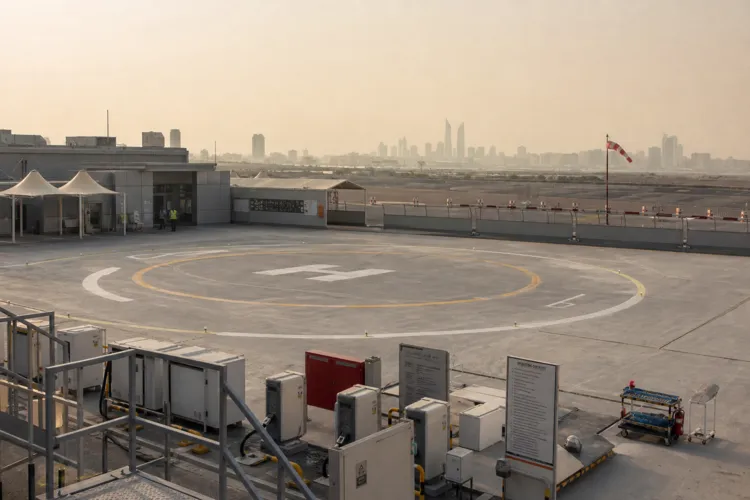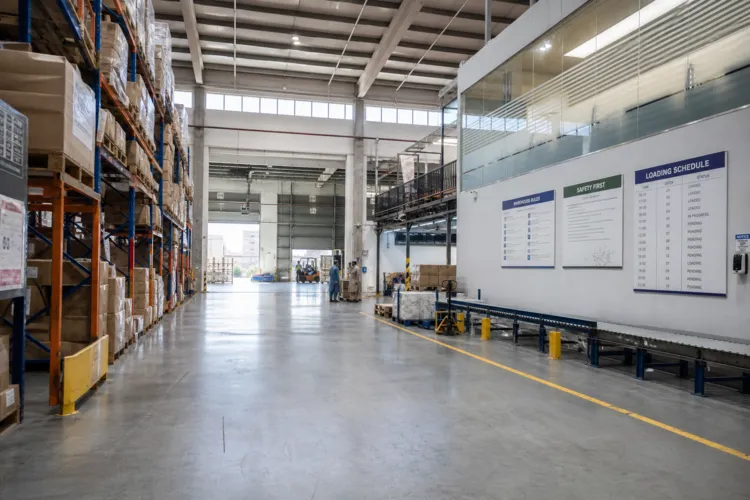

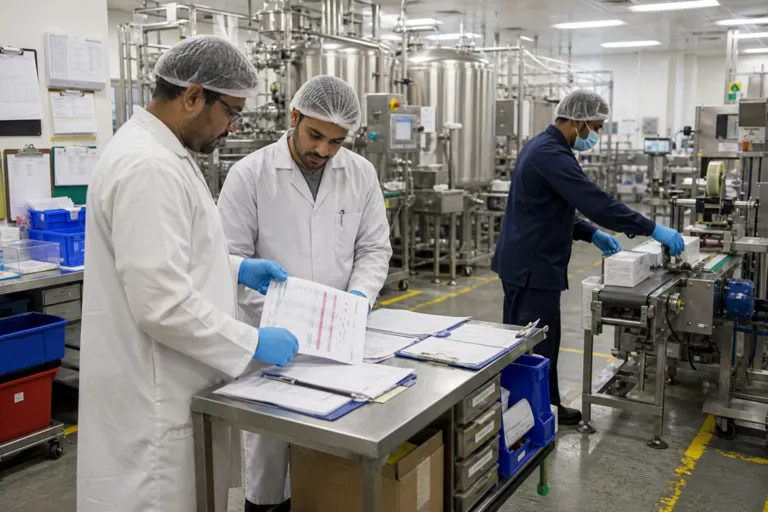
Abu Dhabi pharmaceutical manufacturing is being pulled forward by a broader localization agenda in industry. In 2025, the number of new industrial establishments moving to full operation increased by 53% to reach 115, compared to 75 in 2024. This shift matters for pharma because it signals faster conversion from project to operations, which is the hard part of localization. The same industrial momentum is framed around strengthening supply chains and increasing local manufacturing capacity. Those priorities directly shape how pharmaceutical producers plan facilities, workforce needs, and local sourcing in 2026.
The Abu Dhabi Industrial Strategy (ADIS), launched in 2022, is described as advancing the sector through targeted programmes. These include talent development, homegrown supply chains, ecosystem enablement, value chain development, Industry 4.0, and a circular economy. In the government’s own positioning, manufacturing is a key component of strategies to accelerate economic growth and diversification. ADIS is also described as aligned with national priorities to strengthen supply chains, increase local manufacturing capacity, and attract global industrial leaders. For pharmaceutical operations, that language points to practical levers: skills pipelines, supplier depth, and technology-led manufacturing upgrades.
Key Players and Ecosystem Signals Shaping 2026
Several ecosystem signals around Abu Dhabi point to a 2026 environment that rewards localized delivery. ADNOC announced it will award 200 billion dirhams ($55 billion) in new projects between 2026 and 2028, and it tied delivery to its In-Country Value (ICV) program, which prioritizes “Made in the Emirates” products. In a separate update, ADNOC confirmed $150 billion in capex for 2026-2030, and also set a target to bring $60 billion into the UAE economy over five years through ICV, with $17.7 billion put back into the economy in 2025. While these figures are not pharma-specific, they are relevant for pharma manufacturing inputs, utilities, packaging, and facility build ecosystems that often rely on the same industrial base.
Regional context also affects how Abu Dhabi pharmaceutical manufacturing leaders talk about resilience and facility readiness. PharmaXcelerate 2026 is scheduled for 31 March to 2 April 2026 in Dubai, positioned around how facilities and quality systems will be designed, built, and optimized. The agenda language highlights contamination control strategies, compliant AI adoption, and accelerating tech transfer. Separately, an AIM guide for biopharma expansion into the GCC says the region offers opportunity, but also “harmonized regional frameworks and country-specific complexities” that require early, holistic planning and agile timelines. For Abu Dhabi-based manufacturers, that reinforces a 2026 focus on execution discipline and partner selection.
For the 2026 capacity outlook, the cleanest signal in the sources is operational momentum rather than a stated pharma capacity number. The jump to 115 new industrial establishments reaching full operation in 2025 indicates more industrial assets becoming real, not just announced. ADIS also explicitly emphasizes value chain development, homegrown supply chains, and Industry 4.0, which aligns with scaling local production in a controlled, quality-driven way. The most defensible 2026 takeaway from the available evidence is directional: more localized manufacturing capability is being prioritized, and more facilities are reaching operational status, which can support a stronger base for pharmaceutical manufacturing execution.
What is driving Abu Dhabi pharmaceutical manufacturing localization?
What is a key 2025 signal relevant to the 2026 outlook?
How does the In-Country Value (ICV) program relate to manufacturing execution?
What events in 2026 highlight facility and quality-system priorities in the region?