
Abu Dhabi is planning for fast population growth, and the numbers explain why liveability is being treated as a delivery challenge, not just a vision. The emirate reached 4,135,985 residents in 2024, up 7.5% in a single year, according to the Statistics Centre Abu Dhabi. That increase was described as close to 290,000 people in twelve months. Housing stock rose more slowly, up 3.9% to 783,970 units. With more than half of residents aged 25 to 44, demand lands on homes plus the surrounding services people need near work: schools, clinics, parks, and transport.
At LIVEX 2026, held at ADNEC Centre Abu Dhabi and closing on 1 October, organisers grouped projects under six themes: liveability, culture, education, economy, energy, and health. The combined value of announced projects and initiatives was put above AED 100 billion. Within that pipeline, the biggest single programme was presented as the second phase of Abu Dhabi’s Lifestyle Strategy, with AED 42 billion for new projects. The first phase was reported to have delivered more than 60 projects worth AED 12 billion. In parallel, the Department of Energy plans AED 250 billion over ten years for power, water, and district cooling, underscoring how community assets depend on deeper utility capacity.
What Phase 2 Changes: From Handover to Operational Performance
The Department of Municipalities and Transport (DMT) describes Phase 2 as a five-year strategic roadmap that raises benchmarks for urban wellbeing. Instead of judging success mainly by whether a facility exists, Phase 2 shifts to operational quality, efficiency, and social impact. That means a park, sports facility, or community centre is evaluated not only at completion, but also by how it is run and what community programmes and social initiatives it hosts. DMT also said Phase 2 expands to integrate current and future developer master developments, aiming for uniform quality-of-life standards across public municipal projects and private sector developments.
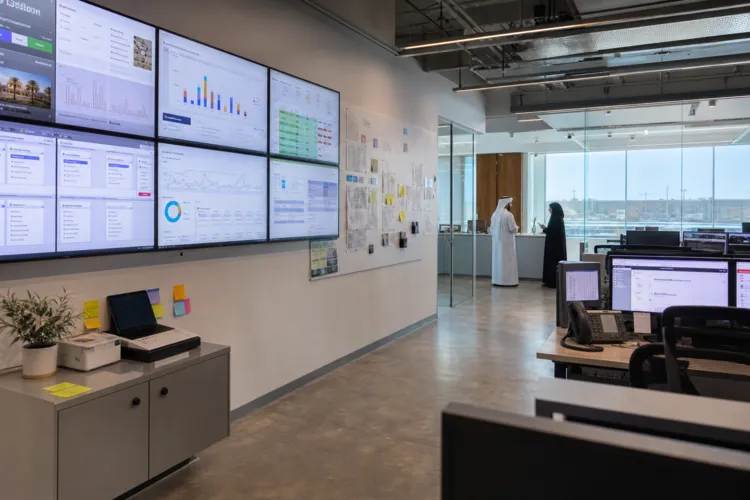
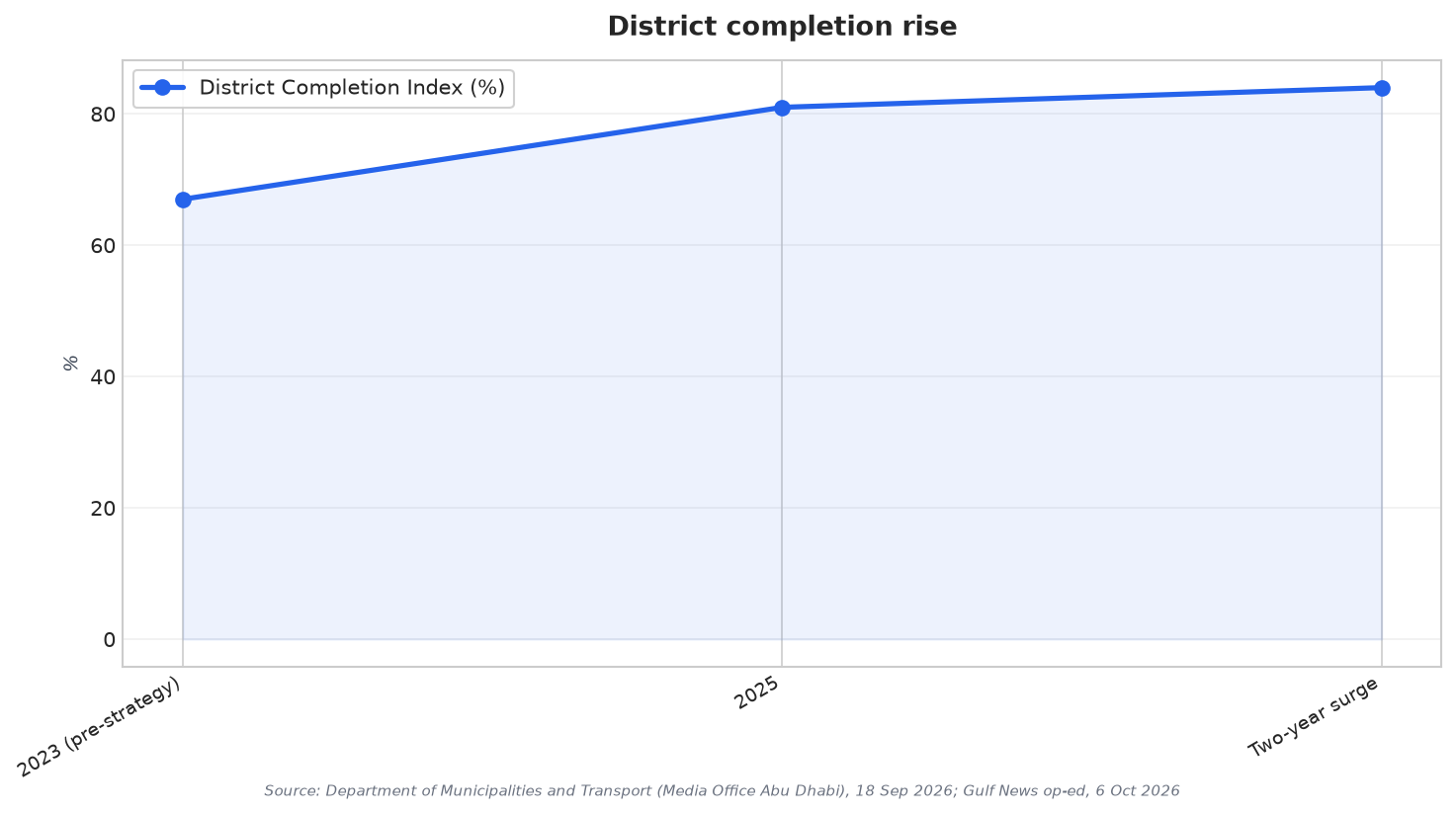
For contractors, this emphasis changes how scope is defined and how performance is tracked. DMT said Phase 2 deploys a unified digital platform powered by smart analytics to monitor the condition and operational quality of infrastructure assets and public amenities. It integrates real-time customer and resident satisfaction survey results with field completion data, enabling planners to pinpoint district needs and guide Capital Expenditure (CapEx) decisions. Phase 1 results provide an indicator of the scale: district completion rose from 67% to 84% in two years, while a separate commentary noted average district-completion scores rising from 67% before 2023 to 81% in 2025. Phase 1 was also associated with outputs including over 200 parks and sports courts, 24 schools, 21 mosques, 28 community majlises, nearly 120 kilometres of walking paths, and 283 kilometres of cycling tracks.
Operators and service providers should read Phase 2 as an opening for long-term contracts tied to measurable outcomes. If operational excellence becomes a success measure, demand rises for day-to-day management, programming, maintenance, and user experience improvements across public assets. LIVEX 2026 also signalled wider market momentum: the inaugural event attracted approximately 26,500 visitors from 50 countries, including more than 1,500 investors, and concluded with over 50 agreements and initiatives valued at more than AED 150 billion. In that environment, Abu Dhabi Lifestyle Strategy phase two is not just about building; it is about running neighbourhood assets so residents, visitors, and businesses feel the difference.
What is different about Abu Dhabi’s Lifestyle Strategy Phase 2 compared with Phase 1?
How much work was delivered in Phase 1 of the Liveability Strategy?
Which delivery metrics improved under the strategy?
What opportunities does Phase 2 create for contractors and operators?