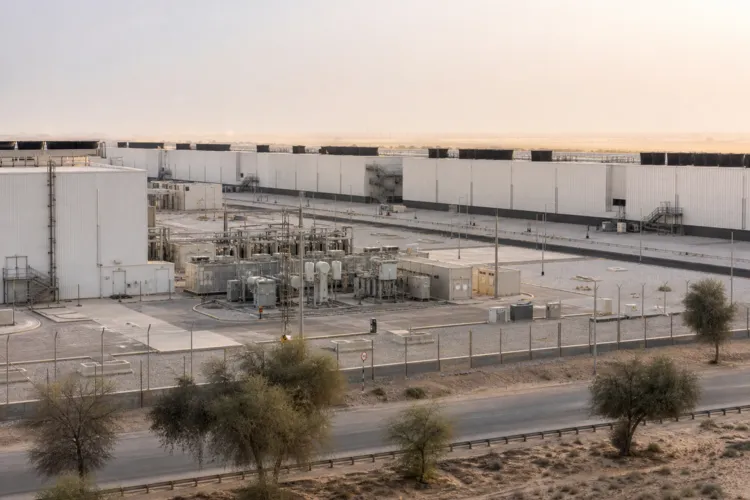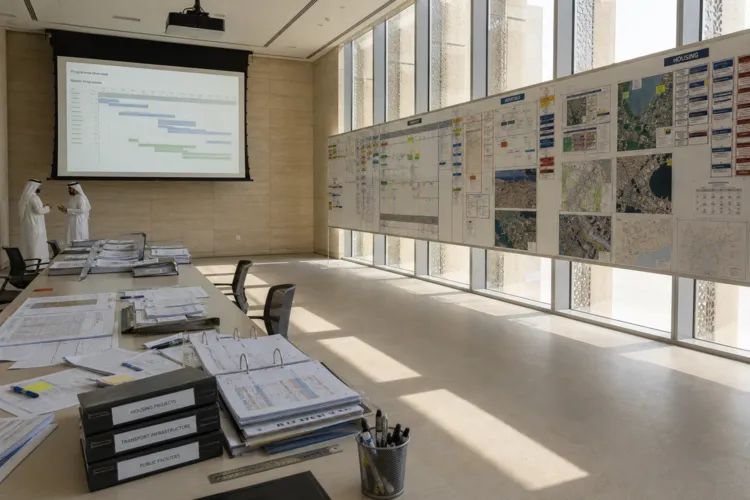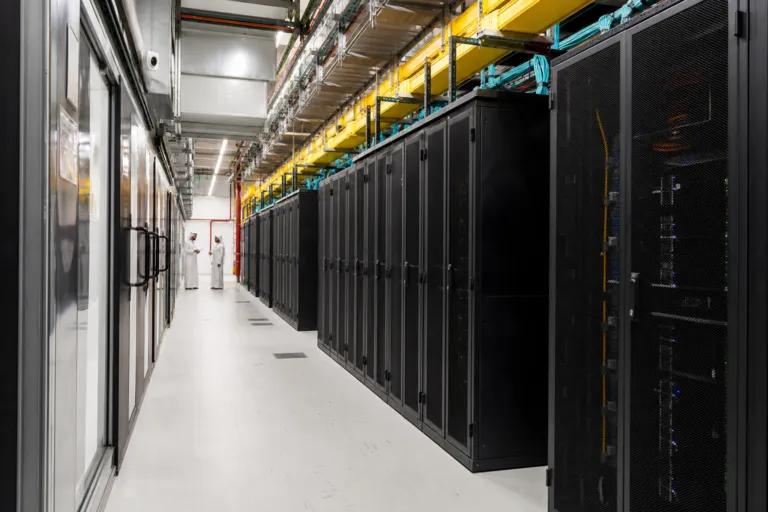
Abu Dhabi sits at the center of the UAE’s data center surge, as operators scale for sovereign cloud mandates and AI workloads that need dense compute and fast delivery. Development is concentrated in Abu Dhabi and Dubai, and advisory firms increasingly rank the two hubs as standout “next-wave” markets rather than secondary outposts. Live capacity in the UAE surpassed 376 MW in 2025, as operators raced to lock in power, land, and government workloads ahead of 2026 expansions. Industry estimates also place total installed IT capacity across Dubai, Abu Dhabi, and the Northern Emirates at more than 500 MW as of 2026.
Hyperscale announcements are shaping how the Abu Dhabi data centre market is perceived by enterprise buyers and colocation tenants. Microsoft and Abu Dhabi-based G42 announced a 200 MW expansion of UAE data center capacity via G42 subsidiary Khazna Data Centers, with operations expected to begin by the end of 2026. Separately, the Stargate UAE project targets 1 GW of AI compute capacity in Abu Dhabi, with the first 200 MW phase on an accelerated timeline toward delivery in 2026. That initial deployment is described as housing approximately 100,000 NVIDIA Grace Blackwell GB300 chips, implying specialized power density and purpose-built liquid cooling requirements.
Power Supply and Cooling: The Real Constraints Behind AI Capacity
Power planning is now the bottleneck that sits behind every new megawatt of AI capacity. Barakah nuclear power plant reached full 5.6 GW capacity in 2024 and, according to the source’s calculations, supplies roughly 25% of UAE electricity, yet it “cannot ramp quickly enough” when server farms spike demand. The same source states UAE data centers consumed an estimated 8–10 TWh in 2024, with projections suggesting 15–20 TWh by 2026 as phased deployments and additional operators scale capacity. Extreme climate adds another constraint: summer temperatures exceeding 45°C push operators to invest in district cooling, evaporative cooling, and liquid cooling as a differentiator tied to operating cost and sustainability expectations.
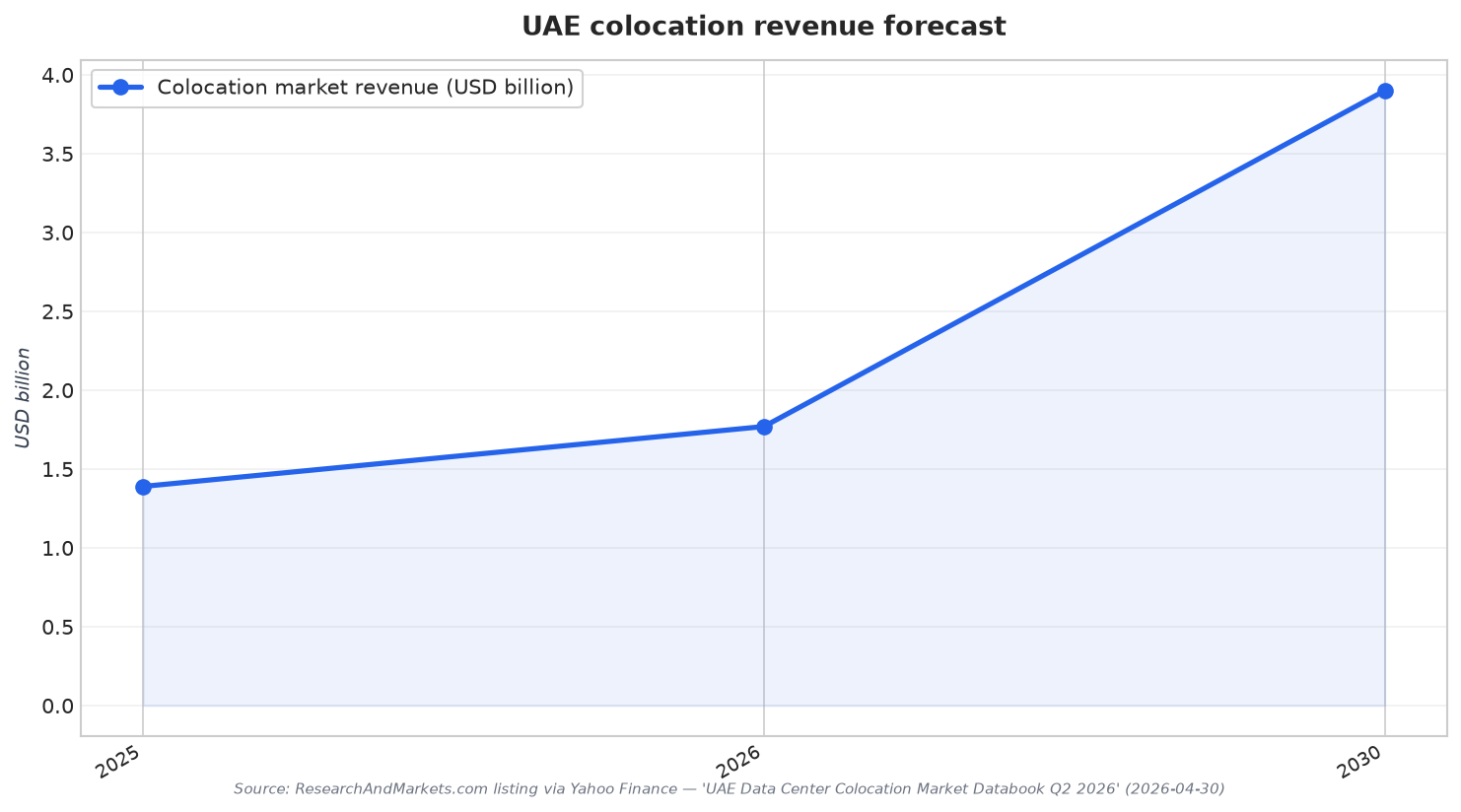
Colocation demand is rising alongside hyperscale build-outs, especially as enterprises pursue hybrid and multi-cloud architectures and as AI and GPU workloads expand. The UAE colocation market is forecast to grow from about $1.39 billion in 2025 to approximately $3.90 billion by the end of 2030, at a 21.7% CAGR from 2026 to 2030. Another dataset anticipates a 27.5% annual growth rate reaching $1.77 billion by 2026, following a 24.1% CAGR over 2021–2025. Meanwhile, a separate industry estimate places UAE colocation revenue at roughly $1.5–$2 billion annually as of 2026, underscoring that multiple tracking approaches point to rapid expansion, not a flat market.
Supply tightness and build timing also matter for buyers trying to secure space. One source reports utilization at 98.7% in 2025, signaling constrained availability even before the next wave of hyperscale capacity comes online. Khazna surpassed 300 MW live capacity by end-2023 and targets 850 MW by 2029 through projects in Abu Dhabi, Dubai, and Ajman. The same source notes that Microsoft-G42 and du initiatives will add roughly 250–300 MW by 2027, while also warning that simultaneous hyperscale openings in 2026–2027 could briefly tip the market into oversupply if enterprise cloud migrations lag policy expectations. For customers, that mix creates a window where pre-leasing, power certainty, and cooling capability become decisive selection criteria.
How fast is UAE colocation revenue expected to grow through 2030?
What hyperscale capacity additions are tied to Abu Dhabi-based partnerships?
What do the sources say about power constraints for AI data centers in the UAE?
Why is cooling technology becoming a differentiator in Abu Dhabi and Dubai facilities?
What is shaping demand in the Abu Dhabi data centre market specifically?