
In 2026, Abu Dhabi cold chain logistics is shaped by two hard realities: strong temperature-controlled food demand and rising pharmaceutical complexity. A Lineage Cold Chain Insights Survey of 1,000 food and beverage decision-makers across the U.S., Canada, and Mexico reported that 72% saw increased demand for refrigerated and frozen foods. The same survey also captured an operating backdrop defined by disruption. It found 73% expected tariffs to negatively affect finances in 2026, pushing sourcing and cost strategies to change. These signals are not Abu Dhabi-specific. But they describe the pressures that global cold chain networks must plan for when serving F&B categories that depend on strict temperature control.
That pressure is accelerating a technology-and-partnership playbook that matters to any market building resilient cold capacity. In the Lineage survey, 60% ranked data and AI among the top forces transforming operations. The investment focus was on visibility, routing, transportation optimization, and warehouse automation. Many respondents also reported that programs were delivering results, with 24% exceeding ROI expectations and 62% meeting or nearing targets. For Abu Dhabi cold chain logistics providers and shippers, the implication is practical. Service-level performance will increasingly depend on real-time decision-making, automation readiness, and transparent execution with logistics partners rather than only adding basic refrigerated space.
Pharma Demand Raises the Floor for Cold Chain Execution
Pharma demand is also redefining the baseline for cold chain capability. DHL Supply Chain completed a 1-million-sq.-ft. life sciences and healthcare distribution center of excellence in Annville, Pennsylvania, scheduled to open in 2026. DHL said it will operate as a Foreign Trade Zone to streamline customs and regulatory coordination, with FDA and GMP-compliant cold storage. At the network level, DHL is expanding air freight cold chain lanes, including a dedicated Brussels–Cincinnati route, as part of a $2 billion investment in DHL Health Logistics. These moves show what “good” looks like for moving sensitive biologics, specialty drugs, and time-critical healthcare shipments under strict temperature control.
Across the broader pharma logistics landscape, cold storage dependency is rising. Inbound Logistics cited IQVIA reporting that half of new medicines expected to launch over the next five years are expected to require cold storage, up from 37% between 2013 and 2017. That same article also pointed to an industry push toward automation, AI-driven monitoring, and newer refrigeration options. The takeaway for Abu Dhabi cold chain logistics is demand quality, not just demand quantity. As more therapies require controlled temperatures from start to finish, performance expectations move toward validated processes, durable packaging, and tighter monitoring that reduces excursions and disputes.
Capacity strategy matters too, because not all cold storage is equal. A Newmark report noted that the U.S. cold storage sector recorded about 3.5 million square feet of positive absorption in 2025, even as vacancy climbed to a 20-year high amid new supply. It also found demand becoming more selective, with companies choosing newer, high-throughput facilities while older buildings saw record move-outs. This pattern offers a planning lens for Abu Dhabi cold chain logistics: invest in throughput, systems, and compliance-ready specifications that match F&B velocity and pharma validation requirements. The market rewards execution quality, not simply the presence of chilled and frozen cubic meters.
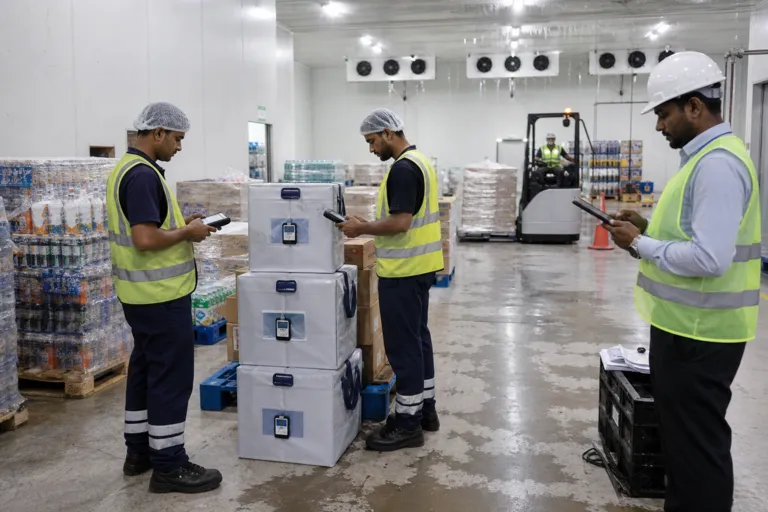
Sustainability signals are also emerging inside pharma-related cold chains. A net-zero pharma supply chain market outlook projected expansion at a CAGR of 23.6% from 2025 to 2032, growing from USD 2.8 billion in 2025 to USD 15.4 billion by 2032, and it explicitly included cold-chain logistics within its application scope. Packaging innovation aligns with that direction. FleetOwner reported Peli BioThermal expanding reusable temperature-controlled packaging to meet growing pharmaceutical customer demand, emphasizing durable solutions that reduce waste and lower total transport costs. For 2026 planning, Abu Dhabi cold chain logistics stakeholders can treat reuse, monitoring, and compliant infrastructure as operational necessities rather than optional add-ons.
What is the 2026 outlook for Abu Dhabi cold chain logistics?
What demand signal is visible for refrigerated and frozen foods in 2026?
How are tariffs expected to affect cold chain planning in 2026?
Why is pharma driving higher cold chain standards?
What kind of cold storage facilities are tenants choosing now?