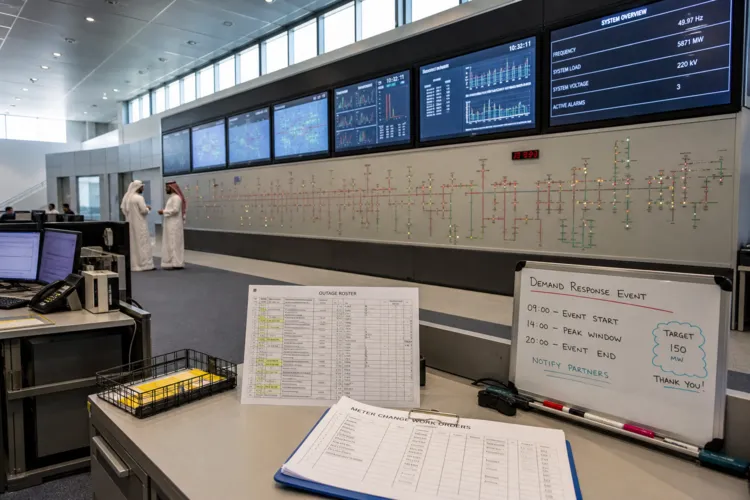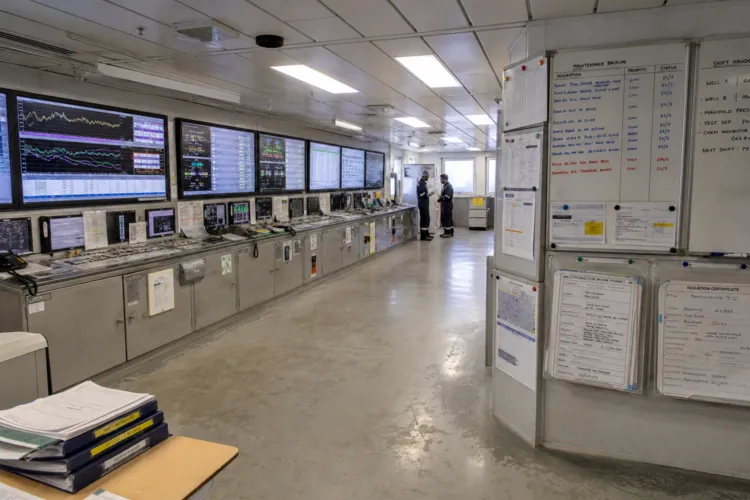

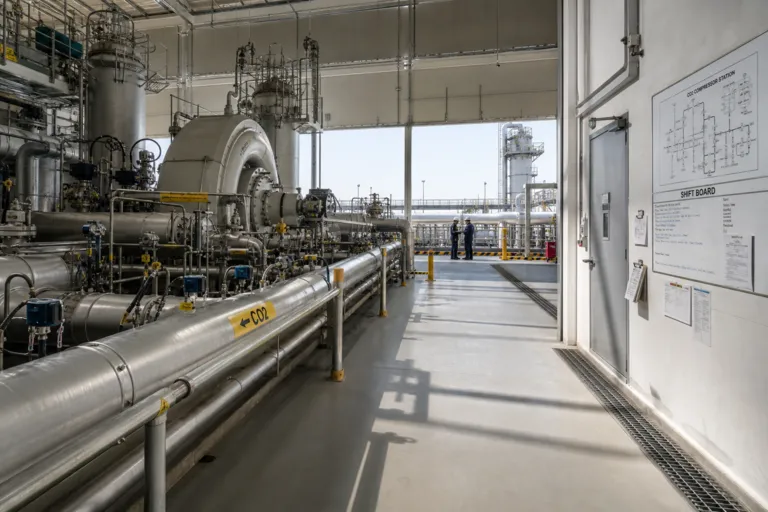
In 2026, Abu Dhabi’s CCUS story is being shaped less by isolated pilots and more by rules, shared infrastructure, and industrial integration. In January 2026, Abu Dhabi’s Supreme Council for Financial and Economic Affairs (SCFEA) launched a Carbon Capture Policy to establish a comprehensive regulatory framework for Carbon Capture, Utilization and Storage (CCUS) across the emirate. The policy is structured around optimizing domestic geological resources for long-term CO2 storage and improving investment efficiency through shared carbon capture and transport infrastructure. It is also intended to regulate CCUS across multiple sectors, enable significant reductions in carbon emissions, and support a diversified, sustainable economy.
That approach closely mirrors what market research describes as the commercial logic of CCUS: policy and regulatory continuity are central to whether projects clear investment hurdles. One global overview values the global CCUS market at USD 5.30 billion in 2025 and forecasts USD 30.7 billion by 2035, with a CAGR of 19.20% from 2026 to 2035. It also notes that capture remains the most capital-intensive step, with the Capture service segment cited at 80.30% share, and solvents and sorbents at 66.42% of the technology mix. These are global indicators, but they help frame why Abu Dhabi’s policy focus on shared infrastructure can matter for industrial deployment economics.
CCUS Project Pipeline Signals for 2026: Scale-Up Meets Execution Risk
Global pipeline data in early-to-mid 2026 adds context for near-term execution risk that any investor watching the Abu Dhabi carbon capture market will want to benchmark against. GlobalData reports that 44 projects came online in 2025, adding about 14.8 mtpa of capture capacity, but momentum softened in H1 2026 with only 4 projects reaching completion. It also tracks 806 active and upcoming projects totaling about 930.6 mtpa, a 2.4% contraction versus Q1 2026. The same outlook notes 27 projects in construction and commissioning that still aim to come online in 2026, implying a busy delivery calendar where schedule pressure can raise risk.
Capacity already operating worldwide shows the technology is beyond pilots, while still highlighting the gap to large-scale decarbonization. International Energy Agency (IEA) data cited in one market overview indicates more than 50 million tonnes (Mt) of CO2 capture and storage capacity is in operation globally as of early 2025, and approximately 45 commercial-scale CO2 capture facilities operate worldwide. A separate commentary estimates regional shares of the total project pipeline at around 26% for Europe, about 21% for Asia-Pacific, and roughly 7% for the Middle East & Africa, while stating oil and gas is the largest user at about 53% of global captured CO2 and industrial decarbonization (such as cement and steel) represents around 25% of planned capacity worldwide.
Investment themes in 2026 also reinforce why shared networks and transport-and-storage integration are becoming central to CCUS buildouts. One 2026 market note states that by June 2026, demand was supported by shared pipelines, shipping networks, and hub-based infrastructure that connect capture locations with utilization sites and permanent storage areas. The same source says that in March 2026, the IEA stated more than US$15 billion in commercial debt had been raised for CCUS projects during the previous two years. For Abu Dhabi, SCFEA’s policy emphasis on shared capture and transport infrastructure and long-term storage resources fits this direction of travel, while global pipeline volatility underlines why clear frameworks and execution discipline matter in 2026.
What changed for CCUS in Abu Dhabi in 2026?
How big is the global CCUS project pipeline in 2026?
What do 2025 and H1 2026 completions say about execution risk?
How much capture and storage capacity is operating globally as of early 2025?
What does the 2026 outlook suggest for investment in the Abu Dhabi carbon capture market?