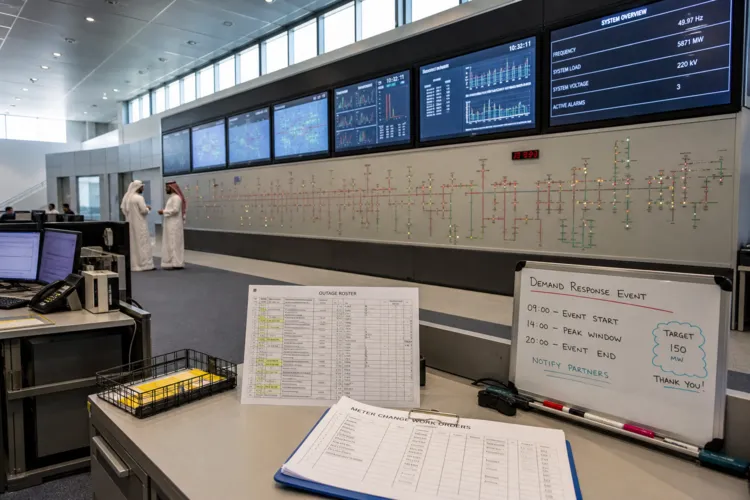

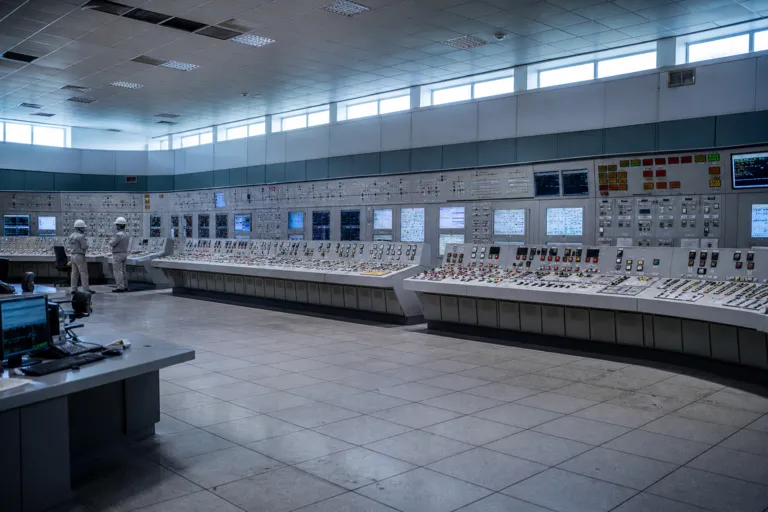
In the Abu Dhabi nuclear energy market, Barakah has become a defining anchor for reliability as the wider UAE power system expands. Mordor Intelligence estimates the UAE power market at 54.15 GW in 2026, with a projection to reach 68.08 GW by 2031 at a 4.68% CAGR. In that shift, the report highlights a move away from gas-dominated baseload toward a mix where nuclear supports system resilience while solar absorbs most additions. This matters for Abu Dhabi because the Barakah Nuclear Energy Plant sits in Al Dhafra, and its output changes how planners think about round-the-clock supply as demand rises across utilities, cities, desalination loads, and industrial users.
Barakah is described across sources as a four-unit APR-1400 site with total nameplate capacity of 5,600 MW, with full commissioning into commercial operation in 2024. Multiple sources also state it generates approximately 40 TWh per year, which ENEC data frames as equivalent to about 25% of the UAE’s electricity needs. The same ENEC-linked reporting says Barakah avoids more than 22 million tonnes of CO₂ emissions per year, while another source specifies 22.4 million tonnes annually. “WE THE UAE 2031” adds that Barakah represents total investment exceeding USD 32 billion across construction, fuel procurement, and operational infrastructure, and reports an Emiratisation rate of 60% among Nawah’s nuclear operations workforce.
ENEC Expansion Signals and What “More Baseload” Really Means
While Barakah is fully operational, the expansion question is now about timelines and use cases. “WE THE UAE 2031” says ENEC has indicated interest in studying additional nuclear capacity, including small modular reactors (SMRs) for industrial applications and desalination. Forbes adds a practical constraint: any hypothetical Unit 5 or new plant would require 8–12 years from approval to operation. That long lead time pushes near-term planning toward making best use of existing nuclear baseload, then layering flexibility around it, especially because nuclear is positioned in the National Energy Strategy 2050 alongside solar and wind as clean energy.
Flexibility is where the demand shock from AI infrastructure shows up. Forbes reports data centers alone could consume 18–21% of total demand under growth scenarios, while also noting nuclear “cannot ramp quickly enough when server farms spike demand.” This is why the system conversation extends beyond “more clean energy” to “firm, responsive power.” In parallel, Mordor highlights ultra-low PV tariffs, including solar bids as low as USD 0.0135 per kWh, and points to projects like a 5.2 GW Masdar 24/7 initiative combining photovoltaics with 19 GWh of storage. These numbers illustrate the direction of travel: nuclear for steady output, and solar-plus-storage for more dispatchable support.
Heavy industry adds another layer of baseload demand alongside AI. MarkWide Research notes that the system’s purpose includes serving energy-intensive industries, and it describes industrial clean power procurement mandates where aluminum smelters and petrochemical complexes contract dedicated renewable capacity, creating anchor demand for solar PV and nuclear output at Barakah. Mordor also flags that commercial and industrial demand is advancing at a 10.3% CAGR through 2031, reinforcing why round-the-clock capacity matters, not just annual energy volumes. Together, these dynamics explain why Abu Dhabi planners are pairing Barakah’s steady generation with grid investment, rapid procurement cycles, and complementary resources to keep reliability tight as the load profile changes.
What role does Barakah play in Abu Dhabi’s nuclear-power outlook?
How does AI data-center growth affect baseload planning in Abu Dhabi?
Is ENEC looking beyond Barakah for more nuclear capacity?
What figures show the wider market context for the Abu Dhabi nuclear energy market?