
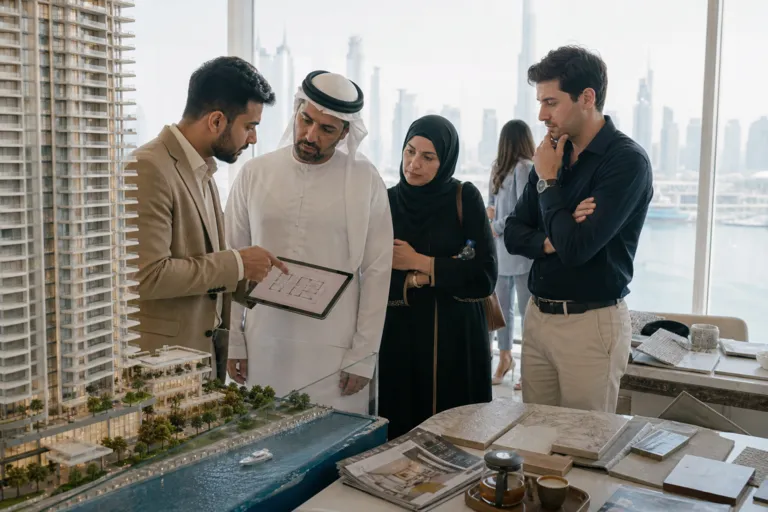
The Abu Dhabi branded residences market is being reshaped by the same forces that are accelerating branded living globally. Branded residences are positioned as luxury homes tied to well-known brands, and the value proposition is not only design but hotel-like service and convenience. HospitalityNet describes a market that has grown 180% in the last decade, with compound annual growth rates in double digits between 11% and 17%. It also states that supply is expected to double by 2030. These signals matter for 2026 decision-making, because they point to a product category that is no longer experimental and is still expanding.
For high net worth and ultra-high net worth buyers, the demand story is increasingly about trust and effortless living. HospitalityNet quotes Minor Hotel Group’s Omar Romero on the draw of consistency, lifestyle integration, and the feeling that every need is anticipated and catered for. Accor One Living’s Jeff Tisdale also ties growth to demand for second, third, and even fourth homes, plus turnkey recreational homes that can be rented out when owners are away. In practice, this helps explain why buyers accept a premium, but only when operations match the brand promise through operational excellence and first-rate hospitality management.
Why Abu Dhabi Is in the 2026 Branded Living Conversation
Abu Dhabi appears in 2026 coverage because brand universes are widening beyond traditional hotel operators. WWD reports that Italy’s Oniro Group debuted in branded residences with Jacob & Co. for “Beachfront Living by Ohana,” described as situated conveniently between Abu Dhabi and Dubai and curated by Ohana Development. The same WWD piece frames 2026 as a key year for the branded real estate sector, with fashion, design, hospitality, and even automotive names “cashing in.” For Abu Dhabi’s luxury real estate positioning, this matters because it broadens the pool of brand-led residential concepts that can compete on identity, design language, and service standards.
Regional context still shapes demand signals that spill over into Abu Dhabi. Knight Frank’s Dubai research, reported by Yahoo Finance, highlights that branded residences represent about 2% of Dubai’s residential market, yet the top end of the market is active. Residences priced at $10 million or more totaled over $2.5 billion in transactions in Q2 2025, with 143 luxury deals in total. In that same quarter, apartments outpaced villas in the $10 million-plus segment, with 80 apartment sales versus 63 villas. These are Dubai figures, not Abu Dhabi data, but they show how branded, high-end apartment product can pull demand even in markets where branded inventory is a small slice.
Financing logic is another reason the model is spreading. HospitalityNet cites an HVS analysis arguing branded residences have matured into a mainstream financing tool for mixed-use development, because off-plan unit sales can bring cash into projects long before the hotel opens. The article says this can reduce peak debt and shorten interest accrual, turning marginally bankable projects into clearly financeable ones. For developers targeting 2026 launches and beyond, this supports a practical reason to add branded homes alongside hospitality, especially when the goal is to monetize identity across more than one product type.
What this means for 2026 HNWI demand in Abu Dhabi is a more competitive definition of luxury. HospitalityNet notes that luxury is evolving toward more stripped-down interpretations with a high emphasis on experience-enhancing service, while still remaining turnkey and brand-consistent. That connects with the idea of extreme brand loyalty described by Knight Frank’s Faisal Durrani in BBC reporting, where some buyers want to “live and breathe a particular brand.” In this environment, the Abu Dhabi branded residences market is best understood as a contest of service delivery, trusted names, and lifestyle integration, not a contest of finishes alone.
What is driving the Abu Dhabi branded residences market in 2026?
How fast is the branded residences sector growing globally?
Why do HNWIs buy branded residences instead of non-branded luxury homes?
What is a 2026 example linking branded residences to Abu Dhabi?
How do branded residences help developers finance projects?